Education · Registration · Compliance Pharmacy Academy →
Foundation Training Year UK (2026 Guide)

Foundation Training Year UK (2026 Guide)

If you want to become a registered pharmacist in the UK, completing your MPharm degree is only part of the journey.

After graduation, you must complete a 12-month Foundation Training Year before you can sit the registration assessment and join the professional register.

This guide explains everything you need to know about the Foundation Training Year in 2026.


What Is the Foundation Training Year?

The Foundation Training Year (formerly called the pre-registration year) is a structured 12-month supervised training programme.

It is regulated by the General Pharmaceutical Council (GPhC) in England, Scotland and Wales.

In Northern Ireland, it is regulated by the Pharmaceutical Society of Northern Ireland (PSNI).

During this year, trainee pharmacists work under the supervision of a designated supervisor while developing practical, clinical and professional competencies.


Why Is the Foundation Year Required?

The Foundation Training Year ensures that newly qualified pharmacists:

  • Can apply clinical knowledge safely in practice
  • Demonstrate patient-centred care
  • Understand legal and ethical responsibilities
  • Work effectively within NHS and community systems
  • Meet national professional standards

It bridges the gap between academic study and independent practice.


Where Can You Complete Foundation Training?

Training placements are typically available in:

  • Community pharmacies
  • NHS hospital pharmacies
  • Primary care networks (PCNs)
  • GP practices
  • Split-sector placements (e.g., community + hospital)

In England and Wales, placements are now largely managed through the national recruitment system via NHS England.

Competition can be high in certain regions.


How to Apply for Foundation Training

Most applicants apply through the national Oriel recruitment system.

Typical process:

  1. Submit application
  2. Situational judgement assessment
  3. Ranking and preferencing placements
  4. Offer allocation

Northern Ireland follows a separate application process via PSNI structures.

Applications usually open in the summer before the final MPharm year.


What Do Trainee Pharmacists Earn?

Foundation trainee salaries vary depending on sector and employer.

Approximate 2026 ranges:

  • Community pharmacy: £22,000 – £26,000
  • NHS hospital placements: £24,000 – £28,000

Salaries may vary by region and employer.


What Competencies Must Be Achieved?

Trainees must demonstrate competency against GPhC standards, including:

  • Clinical assessment and decision making
  • Safe and accurate dispensing
  • Communication skills
  • Professional judgement
  • Leadership and teamwork
  • Legal and regulatory compliance

Your supervisor signs off on progress throughout the year.


The GPhC Registration Assessment

After completing your Foundation Training Year, you must pass the registration assessment set by the General Pharmaceutical Council.

The assessment tests:

  • Clinical knowledge
  • Calculations
  • Application of law and ethics
  • Safe decision making

It is typically held twice per year.

You must pass to register as a pharmacist in Great Britain.


What Happens After You Pass?

Once you:

  • Complete Foundation Training
  • Pass the registration assessment
  • Meet character and health requirements

You can apply to join the GPhC register and legally practise as a pharmacist.


Key Changes Since 2021

The old “Pre-Registration Year” model has evolved into a more integrated foundation training approach.

Changes include:

  • Greater clinical exposure
  • Structured supervision
  • Clearer competency framework
  • Increasing integration with independent prescribing training in the future

Common Questions

Is Foundation Training Mandatory?

Yes. You cannot register without completing it.

Can I Fail Foundation Training?

Yes. If competencies are not met, training may be extended.

Can I Change Placement Mid-Year?

Possible, but subject to approval and availability.

Is the Foundation Year Paid?

Yes, it is a salaried position.


Final Advice for MPharm Students

  • Apply early
  • Prepare seriously for the situational judgment assessment
  • Choose placements that match your long-term career goals
  • Keep detailed evidence of your competency development

The Foundation Training Year is demanding — but it is the final step before becoming a fully registered pharmacist.

UK UniversitiesUK Universities Offering an MPharm Degree (2026 Complete Guide)UK Universities

UK UniversitiesUK Universities Offering an MPharm Degree (2026 Complete Guide)UK Universities

To practise as a pharmacist in Great Britain, you must complete a Master of Pharmacy (MPharm) degree accredited by the General Pharmaceutical Council (GPhC).

In Northern Ireland, pharmacy degrees are accredited by the Pharmaceutical Society of Northern Ireland (PSNI), though programmes align closely with GPhC standards.

Only graduates of accredited MPharm programmes may progress to foundation training and the registration assessment.

This guide lists recognised UK universities offering accredited MPharm degrees across:

  • England
  • Scotland
  • Wales
  • Northern Ireland

How Accreditation Works

The General Pharmaceutical Council sets education and training standards for pharmacists in England, Scotland, and Wales.

Universities must:

  • Deliver an integrated 4-year MPharm programme
  • Provide structured clinical placements
  • Meet strict curriculum and governance standards
  • Undergo periodic reaccreditation

Accreditation status can change. Always verify directly with the university before applying.


England – MPharm UK Programmes

MPharm at Aston University – Birmingham

Typical Offer: AAB–AAA (Chemistry required)
Well-established pharmacy school with strong employer links.
Course page: https://www.aston.ac.uk/study/courses/pharmacy-mpharm

MPharm at University of Bath – Bath

Typical Offer: AAA
Highly competitive entry with a strong academic reputation.
Course page: https://www.bath.ac.uk/courses/undergraduate-2026/pharmacy/mpharm-pharmacy/

MPharm at University of Birmingham – Birmingham

Typical Offer: AAB–AAA
Research-intensive institution with strong NHS integration.
Course page: https://www.birmingham.ac.uk/undergraduate/courses/med/pharmacy-mpharm.aspx

MPharm at the University of Bradford – Bradford

Typical Offer: ABB–AAB
One of the longest-running pharmacy schools in the UK.
Course page: https://www.bradford.ac.uk/courses/ug/pharmacy-mpharm/

MPharm at University of Brighton – Brighton

Typical Offer: ABB–AAB
Modern facilities and structured practice exposure.
Course page: https://www.brighton.ac.uk/courses/study/pharmacy-mpharm.aspx

MPharm at University of Central Lancashire – Preston

Typical Offer: ABB
Integrated clinical focus.
Course page: https://www.uclan.ac.uk/undergraduate/courses/pharmacy-mpharm

MPharm at University of East Anglia – Norwich

Typical Offer: AAB–AAA
Strong healthcare campus and hospital partnerships.
Course page: https://www.uea.ac.uk/course/undergraduate/mpharm-pharmacy

MPharm at University of Huddersfield – Huddersfield

Typical Offer: ABB–AAB
Emphasis on clinical readiness and patient safety.
Course page: https://courses.hud.ac.uk/full-time/undergraduate/pharmacy-mpharm

MPharm at King’s College London – London

Typical Offer: AAB–AAA
Centrally located with major teaching hospital links.
Course page: https://www.kcl.ac.uk/study/undergraduate/courses/pharmacy-mpharm

MPharm at University of Leeds – Leeds

Typical Offer: AAB–AAA
Research-led with integrated placements.
Course page: https://courses.leeds.ac.uk/i532/pharmacy-mpharm

MPharm at University of Lincoln – Lincoln

Typical Offer: ABB
Modern and growing programme.
Course page: https://www.lincoln.ac.uk/course/phaumaub/

MPharm at University of Liverpool – Liverpool

Typical Offer: AAB–AAA
Strong community and hospital pharmacy integration.
Course page: https://www.liverpool.ac.uk/courses/2026/pharmacy-mpharm

MPharm at University of Manchester – Manchester

Typical Offer: AAA
One of the largest and most recognised pharmacy schools in the UK.
Course page: https://www.manchester.ac.uk/study/undergraduate/courses/2026/00554/mpharm-pharmacy/

MPharm at University of Nottingham – Nottingham

Typical Offer: AAA
Research-intensive and highly competitive.
Course page: https://www.nottingham.ac.uk/ugstudy/course/Pharmacy-MPharm

MPharm at University of Portsmouth – Portsmouth

Typical Offer: ABB–AAB
Integrated professional placements.
Course page: https://www.port.ac.uk/study/courses/mpharm-pharmacy

MPharm at University of Reading – Reading

Typical Offer: AAB–AAA
Modern facilities and structured placements.
Course page: https://www.reading.ac.uk/ready-to-study/study/subject-area/pharmacy-ug/mpharm-pharmacy

MPharm at University of Sunderland – Sunderland

Typical Offer: ABB–AAB
Strong practical training focus.
Course page: https://www.sunderland.ac.uk/study/undergraduate/pharmacy-mpharm/

MPharm at University of Wolverhampton – Wolverhampton

Typical Offer: ABB
Newer programme with strong clinical emphasis.
Course page: https://www.wlv.ac.uk/courses/mpharm-hons-pharmacy/


Scotland – MPharm UK Programmes

MPharm at University of Strathclyde – Glasgow

Typical Offer: AAA (Highers accepted)
One of Scotland’s most established pharmacy schools.
Course page: https://www.strath.ac.uk/courses/undergraduate/pharmacy/

MPharm at Robert Gordon University – Aberdeen

Typical Offer: AAB–ABB
Strong clinical integration.
Course page: https://www.rgu.ac.uk/study/courses/765-mpharm-pharmacy


Wales – MPharm UK Programmes

MPharm at Cardiff University – Cardiff

Typical Offer: AAA
Well-regarded programme integrated with NHS Wales.
Course page: https://www.cardiff.ac.uk/study/undergraduate/courses/course/pharmacy-mpharm

MPharm at Swansea University – Swansea

Typical Offer: AAB–ABB
Modern healthcare campus.
Course page: https://www.swansea.ac.uk/undergraduate/courses/medicine-health/pharmacy/mpharm-pharmacy/


Northern Ireland – MPharm UK Programmes

MPharm at Queen’s University Belfast – Belfast

Typical Offer: AAA
Accredited by PSNI and aligned with Great Britain standards.
Course page: https://www.qub.ac.uk/courses/undergraduate/pharmacy-mpharm-b230/

MPharm at Ulster University – Coleraine

Typical Offer: AAB–ABB
Structured clinical placements across Northern Ireland.
Course page: https://www.ulster.ac.uk/courses/202626/pharmacy-37084


Typical Entry Requirements (2026 Overview)

Most universities require:

  • A-Level Chemistry (mandatory)
  • One additional science (Biology, Maths, or Physics preferred)
  • GCSE Maths and English (Grade 4/C or above)
  • Enhanced DBS check
  • Occupational health clearance

Scottish Highers and international equivalents are accepted.

Offers typically range from:

  • AAA (more competitive institutions)
  • ABB–AAB (others)

Always check the specific university website for current requirements.


Tuition Fees (Indicative)

Home students (England cap):
Up to £9,250 per year

Scotland:
Scottish-domiciled students may receive tuition support via SAAS.

International students:
Typically £18,000–£30,000+ per year.

Fees vary annually.


How to Apply

UK Applicants:

  • Apply via UCAS
  • Personal statement required
  • Interviews or assessment days common

International Applicants:

  • Apply via UCAS or directly (varies by institution)
  • Must meet English language standards
  • Student visa required

Choosing the Right Pharmacy School

When comparing universities, consider:

  • Clinical placement structure
  • Student satisfaction ratings
  • Graduate employment rates
  • Living costs in the city
  • Campus facilities
  • International student support

Future sections of this site will include city cost guides and accommodation resources to help applicants plan effectively.


Important Accreditation Notice

Accreditation is regulated by the General Pharmaceutical Council (Great Britain) and the Pharmaceutical Society of Northern Ireland (Northern Ireland).

Always confirm:

  • Current accreditation status
  • Entry requirements
  • English language criteria
  • Tuition fees

before submitting an application.


What Happens After the MPharm?

After graduating, you must:

  1. Complete a 12-month foundation training year
  2. Pass the GPhC registration assessment
  3. Apply to join the professional register

Only then can you legally practise as a pharmacist in Great Britain.

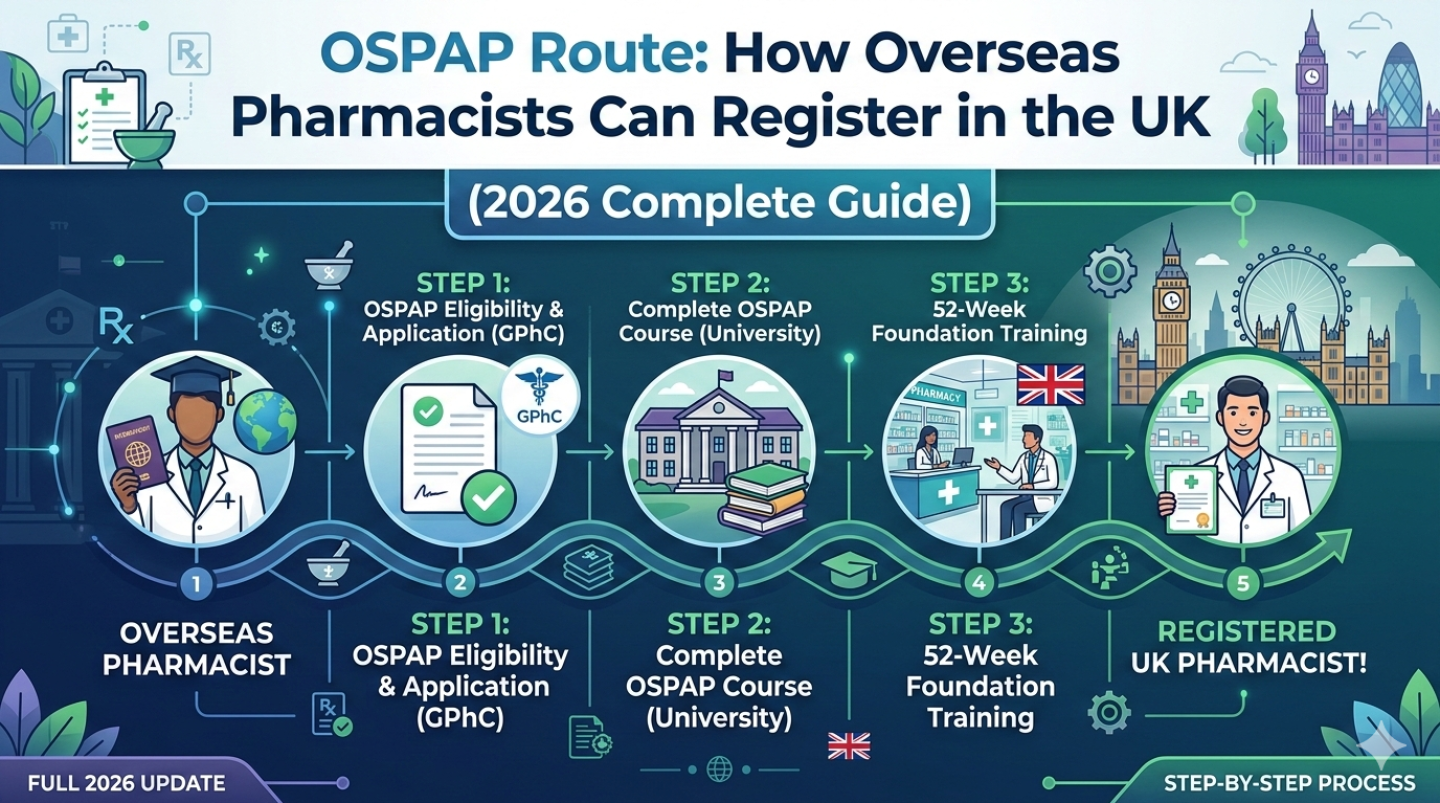
OSPAP Route: How Overseas Pharmacists Can Register in the UK (2026 Complete Guide)

OSPAP Route: How Overseas Pharmacists Can Register in the UK (2026 Complete Guide)

If you qualified as a pharmacist outside Great Britain and want to practise in England, Scotland or Wales, you may need to complete the Overseas Pharmacists Assessment Programme (OSPAP).

The OSPAP route is regulated by the General Pharmaceutical Council (GPhC), which sets the standards for pharmacist registration in Great Britain.

This guide explains eligibility, application steps, English language requirements, costs, and what happens after OSPAP.


What Is OSPAP?

OSPAP stands for Overseas Pharmacists Assessment Programme.

It is a one-year, full-time postgraduate diploma designed to ensure that pharmacists trained outside Great Britain meet UK standards of:

  • Clinical practice
  • Pharmaceutical law
  • Ethics and professionalism
  • Patient safety

OSPAP courses are delivered by GPhC-accredited UK universities.

Completion of OSPAP alone does not grant registration — further steps are required.


Who Needs to Complete OSPAP?

Whether you need OSPAP depends on:

  • Where you obtained your pharmacy qualification
  • Whether your qualification is recognised by the GPhC

Most pharmacists qualified outside the UK (including non-EEA countries) must complete OSPAP before progressing to registration.

The only way to confirm eligibility is by applying directly to the General Pharmaceutical Council for an eligibility assessment.


Step 1: Apply to the GPhC for Eligibility

Before applying to any university, you must:

  1. Submit qualification documents to the GPhC
  2. Provide academic transcripts
  3. Provide evidence of pharmacist registration (if applicable)
  4. Demonstrate English language competence
  5. Pay the evaluation fee

The GPhC will assess whether your qualification is comparable to UK standards.

If approved, you will receive confirmation that you are eligible to apply for OSPAP.


English Language Requirements (2026 Standards)

Most applicants must demonstrate English proficiency.

Accepted tests typically include:

IELTS Academic

  • Minimum overall score: 7.0
  • Minimum 7.0 in each component

OET (Pharmacy)

  • Minimum Grade B in all components

The General Pharmaceutical Council sets strict English standards because pharmacists must communicate clearly and safely with patients.

Some applicants may be exempt if they completed their pharmacy degree in a recognised majority English-speaking country.

Always verify current criteria directly with the GPhC.


Step 2: Apply to an Accredited OSPAP University

Once deemed eligible, you may apply to GPhC-accredited OSPAP providers.

OSPAP is:

  • 1 year full-time
  • Postgraduate diploma level
  • Intensive and clinically focused

Typical tuition fees:

  • £12,000 – £20,000+ (international rates may be higher)

Places are competitive and limited each year.


What Does OSPAP Cover?

The programme focuses on:

  • UK pharmacy law
  • Clinical therapeutics
  • Professional ethics
  • NHS systems
  • Patient consultation skills
  • Prescribing science

The aim is to align overseas training with UK clinical and regulatory expectations.


Step 3: Foundation Training Year

After successfully completing OSPAP, you must:

  • Complete 12 months of foundation training in an approved pharmacy setting

This training is competency-based and supervised.

Standards are regulated by the General Pharmaceutical Council.

You must demonstrate competence across clinical, legal, and professional domains.


Step 4: Pass the GPhC Registration Assessment

At the end of foundation training, candidates must pass the national registration assessment.

The assessment tests:

  • Clinical knowledge
  • Pharmaceutical calculations
  • Safe decision-making
  • Legal application

Only candidates who pass may apply for registration.


Step 5: Apply for Registration

After:

  • Completing OSPAP
  • Completing foundation training
  • Passing the registration assessment

You may apply to join the professional register maintained by the General Pharmaceutical Council.

Once registered, you can legally practise in:

  • England
  • Scotland
  • Wales

(Northern Ireland has a separate regulator.)


How Long Does the OSPAP Route Take?

Typical timeline:

  • GPhC eligibility assessment: Several months
  • OSPAP programme: 1 year
  • Foundation training: 1 year
  • Registration assessment: Scheduled nationally

Total: Approximately 2–3 years from eligibility approval to registration.


Visa Considerations

Most international applicants require:

  • A Student visa for OSPAP
  • A Skilled Worker visa for employment after registration

Visa rules are governed by UK immigration law and may change.

Applicants should consult official UK Government guidance.


Total Estimated Costs

StageApproximate Cost
GPhC evaluation feeSeveral hundred pounds
OSPAP tuition£12k – £20k+
Living costs (1 year)£10k – £18k+
Foundation trainingPaid employment (varies)
Registration assessment feeAdditional fee applies

Careful financial planning is essential.


Common Reasons Applications Are Delayed

  • Incomplete documentation
  • Insufficient English language scores
  • Academic qualification gaps
  • Delays in visa processing

Starting the process early is strongly advised.


Is the OSPAP Route Worth It?

The UK pharmacy profession offers:

  • Stable employment
  • Competitive salaries
  • Advanced clinical roles
  • Independent prescribing opportunities

However, the route requires:

  • Financial investment
  • Academic commitment
  • Regulatory patience

Applicants should carefully assess readiness before starting the process.


Frequently Asked Questions

Can I skip OSPAP?

No — unless the GPhC determines your qualification is directly recognised.

Is OSPAP available online?

No. It is an in-person, full-time programme due to clinical requirements.

Is foundation training paid?

Yes, foundation trainees are typically paid employees.

Can I work as a pharmacist immediately after OSPAP?

No. You must complete foundation training and pass the registration assessment first.


The OSPAP route provides a structured pathway for overseas pharmacists to meet UK standards and practise safely within the NHS and private healthcare systems.

The key first step is always to apply to the General Pharmaceutical Council for an eligibility assessment before committing to any university.

With proper preparation, financial planning, and persistence, overseas pharmacists can successfully transition into UK practice.

Gemini_Generated_Image_6lq33e6lq33e6lq3

Dispensing Errors Prevention in Community Pharmacies (2026 Complete Guide)

Dispensing errors remain one of the most significant patient safety risks in community pharmacy practice. Preventing errors is not only a professional obligation — it is a regulatory requirement enforced by the General Pharmaceutical Council (GPhC).

This guide explains the causes of dispensing errors, legal responsibilities, and proven prevention strategies for UK pharmacies.


What Is a Dispensing Error?

A dispensing error occurs when:

  • The wrong medicine is supplied
  • The wrong strength or formulation is dispensed
  • Incorrect labelling instructions are applied
  • The wrong patient receives the medicine

Dispensing errors differ from near misses, where the error is identified before the medicine reaches the patient.

Both must be managed and recorded appropriately.


Legal & Regulatory Framework

UK pharmacies must comply with:

  • GPhC Standards for Registered Pharmacies
  • Responsible Pharmacist Regulations
  • Clinical governance requirements
  • NHS contractual obligations

The General Pharmaceutical Council expects pharmacies to:

  • Identify risks
  • Record errors and near misses
  • Analyse patterns
  • Implement learning and improvements

Failure to demonstrate learning from errors is a common inspection issue.


Common Causes of Dispensing Errors

Understanding root causes is essential.

1️⃣ Look-Alike, Sound-Alike Medicines (LASA)

Examples include medicines with similar names or packaging.

2️⃣ Workflow Interruptions

Phone calls, patient queries, and staffing pressures increase cognitive load.

3️⃣ Staffing Shortages

Insufficient staff increases time pressure and fatigue risk.

4️⃣ Poor Stock Organisation

Incorrect shelf placement or disorganised storage increases selection errors.

5️⃣ Illegible Prescriptions

Handwritten prescriptions increase interpretation risk.

6️⃣ Inadequate Clinical Checking

Failure to review dose, interactions, or appropriateness.


Near Miss Recording: A Regulatory Expectation

Near misses must be:

  • Recorded consistently
  • Reviewed regularly
  • Used for learning

Best practice includes:

  • Daily review of near misses
  • Monthly pattern analysis
  • Documented team discussions
  • Clear action points

Inspectors expect to see evidence of learning — not just logs.


Practical Strategies to Prevent Dispensing Errors

1️⃣ Robust SOPs

Standard Operating Procedures must:

  • Reflect actual practice
  • Be regularly reviewed
  • Be signed by all staff
  • Clearly define the checking stages

2️⃣ Separate Dispensing & Checking Stages

Where staffing allows:

  • One person assembles
  • Another performs an accuracy check

This separation reduces confirmation bias.


3️⃣ Use of Tall Man Lettering

Highlighting parts of medicine names reduces LASA confusion.

Example:

  • predniSONE vs prednisoLONE

4️⃣ Shelf Organisation Controls

  • Separate LASA medicines
  • Use warning stickers
  • Store high-risk medicines separately
  • Regular stock audits

5️⃣ Minimise Interruptions

  • Establish “checking zones”
  • Use visual signals during accuracy checking
  • Train staff to triage interruptions

6️⃣ Temperature & Storage Monitoring

Incorrect storage may affect the integrity of the medicine.

Ensure:

  • Daily fridge temperature logs
  • Escalation procedures for excursions

7️⃣ Use of Technology

Modern safeguards include:

  • Barcode scanning systems
  • PMR system alerts
  • Electronic Prescription Service integration

Many pharmacies operate under systems supported by NHS England through the Electronic Prescription Service (EPS).

Technology reduces — but does not eliminate — risk.


What to Do If an Error Reaches a Patient

If a dispensing error reaches a patient:

  1. Act immediately
  2. Assess patient risk
  3. Inform the patient honestly
  4. Escalate to the superintendent if required
  5. Record the incident thoroughly
  6. Consider reporting to the National Reporting and Learning System (NRLS)
  7. Document learning outcomes

Professional indemnity insurers should be notified where appropriate.

Transparency is encouraged under duty of candour principles.


GPhC Inspection Expectations

Inspectors will examine:

  • Near miss logs
  • Error reporting systems
  • Evidence of learning
  • Staff awareness
  • Risk assessments
  • SOP compliance

The General Pharmaceutical Council expects pharmacies to demonstrate a culture of openness and improvement.


High-Risk Areas to Monitor

Certain activities carry elevated risk:

  • Controlled Drugs dispensing
  • Methadone & supervised consumption
  • Dosette/blister pack preparation
  • Paediatric dosing
  • High-risk medicines (e.g. anticoagulants, insulin)

Additional safeguards should be in place for these services.


Building a Safety Culture

Preventing dispensing errors is not solely procedural — it is cultural.

Strong pharmacies demonstrate:

  • Open reporting without blame
  • Team learning discussions
  • Ongoing training
  • Clear leadership
  • Adequate staffing

Blame-based cultures suppress reporting and increase long-term risk.


Key Performance Indicators to Track

Consider monitoring:

  • Number of near misses per 1,000 items
  • Error trends by medicine category
  • Repeat LASA incidents
  • Staffing levels vs error frequency

Data-driven governance strengthens inspection outcomes.


Dispensing error prevention is central to patient safety, regulatory compliance, and professional reputation.

Pharmacies that:

  • Maintain strong SOP systems
  • Record and analyse near misses
  • Invest in staff training
  • Optimise workflow
  • Encourage transparent reporting

are far more likely to meet regulatory standards and protect patients effectively.

Patient safety is not optional — it is foundational to pharmacy practice in the UK.

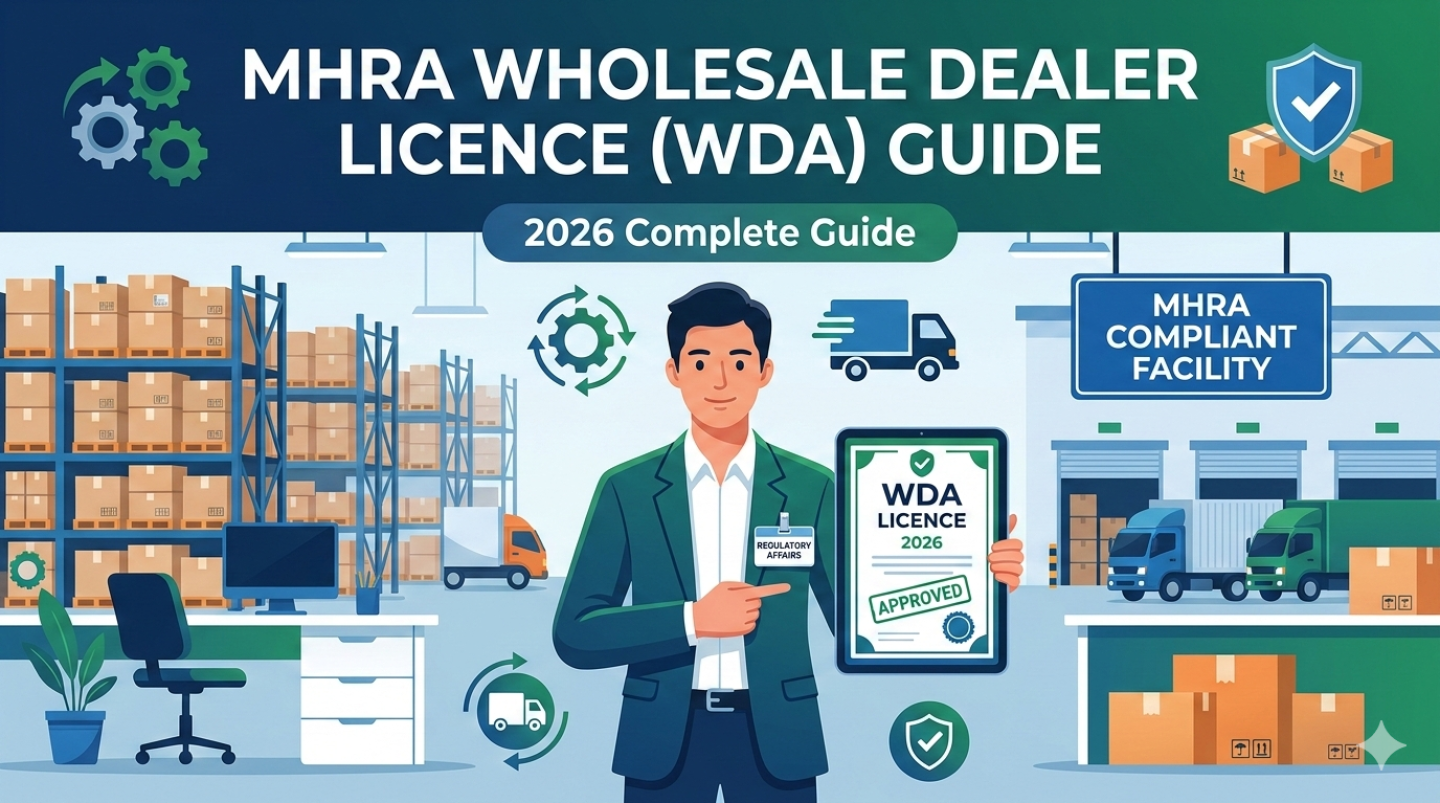
MHRA Wholesale Dealer Licence (WDA) Guide (2026 Complete Guide)

MHRA Wholesale Dealer Licence (WDA) Guide (2026 Complete Guide)

If you intend to distribute medicines wholesale in the UK, you may require a Wholesale Dealer Authorisation (WDA). This licence is issued by the Medicines and Healthcare products Regulatory Agency (MHRA) and ensures compliance with Good Distribution Practice (GDP).

This guide explains when a WDA is required, how to apply, and how to remain compliant.


What Is a Wholesale Dealer Authorisation (WDA)?

A WDA allows a business to:

  • Buy medicines
  • Store medicines
  • Sell or supply medicines to other authorised persons

This includes supplying:

  • Pharmacies
  • Hospitals
  • Other wholesalers
  • Healthcare providers

A WDA is required under the Human Medicines Regulations if you are engaged in wholesale distribution activities in the UK.


Do Pharmacies Need a WDA?

Most community pharmacies do not need a WDA for routine dispensing.

However, you may require one if:

  • You regularly supply medicines to other pharmacies
  • You export medicines
  • You distribute medicines beyond the limited “occasional wholesale” exemptions

The MHRA applies a strict interpretation where activity becomes commercial wholesale distribution.


Types of WDA

The main authorisation is:

  • Wholesale Dealer Authorisation (Human)

There are separate regimes for veterinary medicines.


Key Requirements Before Applying

Before applying, you must:

  • Establish suitable premises
  • Implement a GDP-compliant quality system
  • Appoint a Responsible Person (RP)
  • Prepare SOPs covering distribution activities
  • Ensure temperature-controlled storage capability

Good Distribution Practice (GDP)

GDP ensures medicines are consistently stored, transported, and handled under suitable conditions.

GDP principles include:

  • Quality management systems
  • Documented procedures
  • Temperature control and monitoring
  • Supplier and customer qualification
  • Recall procedures
  • Complaint handling systems
  • Anti-falsified medicines safeguards

GDP compliance is assessed by MHRA inspectors.


The Responsible Person (RP)

Every WDA holder must appoint a Responsible Person.

The RP must:

  • Be appropriately qualified and experienced
  • Oversee GDP compliance
  • Maintain the quality system
  • Ensure regulatory obligations are met

The RP’s name must be registered with the Medicines and Healthcare products Regulatory Agency.


Application Process

Applications are submitted to the MHRA and typically involve:

  1. Online application submission
  2. Payment of the application fee
  3. Review of documentation
  4. Pre-authorisation inspection

You must not begin wholesale operations until authorisation is granted.


MHRA Inspection

An MHRA inspector will assess:

  • Premises suitability
  • Security systems
  • Temperature monitoring
  • SOP documentation
  • Staff training records
  • Audit trails
  • Recall procedures

Non-compliance may delay or prevent approval.


Ongoing Obligations

After approval, you must:

  • Maintain GDP compliance
  • Notify MHRA of significant changes
  • Pay annual fees
  • Cooperate with inspections
  • Maintain RP oversight

Failure to comply may result in suspension or revocation.


Common Reasons Applications Are Delayed

  • Weak quality systems
  • Inexperienced Responsible Person
  • Incomplete documentation
  • Poor temperature validation evidence
  • Inadequate security measures

Is a WDA Profitable?

Wholesale operations can be commercially viable but involve:

  • High compliance costs
  • Tight margins
  • Strong competition
  • Significant regulatory oversight

Robust planning is essential before entering the wholesale market.


Final Thoughts

A Wholesale Dealer Authorisation is a serious regulatory commitment. Proper planning, experienced compliance leadership, and strong documentation are essential for approval and long-term success.


Now the third pillar:


Pharmacy Startup Cost Breakdown (2026 Financial Planning Guide)

Opening a pharmacy in the UK requires substantial financial planning. Costs vary widely depending on whether you are purchasing an existing pharmacy or launching a new one.

This guide breaks down realistic startup costs and ongoing financial considerations.


Scenario 1: Buying an Existing Pharmacy

This is the most common route.

Typical purchase prices range from:

  • £300,000 to £2 million+

Valuation is often based on:

  • Percentage of annual NHS turnover
  • EBITDA multiples
  • Location and prescription volume
  • Service income mix

Professional valuation is essential.


Acquisition Costs Breakdown

Cost AreaTypical Range
Purchase price£300k – £2M+
Legal fees£8k – £25k
Accountancy£3k – £10k
Due diligenceVariable
Stamp Duty (if property included)Applicable rates

Bank lending is common, often requiring:

  • 20–40% deposit
  • Strong business plan
  • Personal guarantees

Scenario 2: Opening a New Pharmacy

This route carries a higher regulatory risk but a lower acquisition cost.

Premises & Fit-Out

  • Lease deposit: £5k – £30k
  • Refurbishment: £80k – £250k
  • Consultation room build: Included in fit-out
  • Security systems: £5k – £15k

Fixtures & Equipment

  • Dispensing benches
  • Shelving
  • IT systems
  • PMR software
  • Fridges (temperature monitored)

Estimated total: £20k – £60k+


Initial Stock

Opening stock typically costs:

  • £30k – £100k+

This depends on:

  • Anticipated prescription volume
  • OTC retail strategy
  • Supplier credit terms

Professional & Regulatory Costs

  • GPhC premises registration fee
  • Superintendent Pharmacist appointment (if company)
  • Indemnity insurance
  • NHS application consultancy (if required)

Budget: £5k – £40k depending on complexity.


Working Capital

You must budget for:

  • Staff salaries
  • Rent
  • Utilities
  • Supplier payments
  • Delayed NHS reimbursement cycles

Recommended reserve:

At least 3–6 months operating expenses.


Ongoing Operating Costs

Major recurring costs include:

  • Staff wages (largest expense)
  • National Insurance & pensions
  • Business rates
  • Insurance
  • Utilities
  • IT subscriptions
  • Compliance support

Break-Even Considerations

Profitability depends on:

  • Monthly prescription volume
  • Service income (e.g. Pharmacy First)
  • OTC retail performance
  • Stock control efficiency
  • Staffing model optimisation

Small changes in dispensing volume can significantly affect margin.


Financial Risks to Consider

  • Funding cuts or tariff changes
  • Delayed NHS payments
  • Staff shortages
  • Rising wage costs
  • Regulatory enforcement action

Conservative forecasting is strongly advised.


Opening or acquiring a pharmacy is a significant financial commitment. Detailed due diligence, accurate cashflow forecasting, and regulatory awareness are essential before proceeding.

Professional advice from specialist accountants, solicitors, and pharmacy finance lenders is strongly recommended.

GPhC Inspection Checklist (2026 Complete Guide for UK Pharmacies

GPhC Inspection Checklist (2026 Complete Guide for UK Pharmacies)

GPhC Inspection Checklist (2026 Complete Guide for UK Pharmacies)

All registered pharmacy premises in Great Britain are inspected by the General Pharmaceutical Council (GPhC). Inspections assess whether a pharmacy is meeting the required standards to ensure patient safety.

This guide provides a structured checklist aligned with current GPhC inspection standards to help you prepare effectively.


How GPhC Inspections Work

GPhC inspections:

  • Are usually unannounced
  • Assess compliance against 5 core standards
  • Result in a published inspection report
  • Are graded as:
    • Standards Met
    • Standards Not All Met

Inspection reports are publicly available on the GPhC website.


The 5 GPhC Standards for Registered Pharmacies

Inspections assess compliance with:

  1. Governance
  2. Staff
  3. Premises
  4. Services
  5. Equipment & Facilities

Below is a detailed preparation checklist aligned to each standard.


1️⃣ Governance Checklist

You must demonstrate that your pharmacy is well-managed and safe.

Policies & Procedures

  • Up-to-date Standard Operating Procedures (SOPs)
  • Staff signatures confirming SOP review
  • Clear version control system
  • Regular SOP review schedule

Risk Management

  • Near-miss log maintained and reviewed
  • Dispensing error records documented
  • Evidence of learning and procedural changes

Responsible Pharmacist Requirements

  • Responsible Pharmacist (RP) notice displayed
  • RP log completed accurately
  • RP in physical control of the pharmacy

Complaints & Feedback

  • Documented complaints procedure
  • Patient feedback system
  • Evidence of action taken where necessary

2️⃣ Staff Checklist

Inspectors assess whether staff are competent and properly supported.

  • All pharmacists registered with the GPhC
  • Registration status checked annually
  • Staff training records maintained
  • Induction records completed
  • Ongoing training documented
  • CPD records maintained
  • Clear roles and responsibilities defined

There must be enough suitably trained staff on duty to deliver services safely.


3️⃣ Premises Checklist

Your premises must be safe, secure, and suitable.

  • Clean and hygienic environment
  • Adequate lighting and ventilation
  • Secure storage for medicines
  • Controlled Drugs cabinet compliant with regulations
  • Private consultation room:
    • Confidential
    • Accessible
    • Clearly signposted

The pharmacy must protect patient confidentiality at all times.


4️⃣ Services Checklist

Inspectors assess how services are delivered.

  • Dispensing procedures followed correctly
  • Clinical checks documented where required
  • Prescription handout procedures safe
  • Distance selling compliance (if applicable)
  • NHS service specifications followed
  • Safeguarding procedures in place

If providing advanced or enhanced services, ensure service documentation is complete and auditable.


5️⃣ Equipment & Facilities Checklist

You must have appropriate tools to operate safely.

  • Calibrated measuring equipment
  • Clean dispensing benches
  • Temperature monitoring logs for:
    • Fridges
    • Room storage
  • Data security systems (GDPR compliant)
  • Secure IT systems
  • Access to up-to-date reference materials

Controlled Drugs Compliance

Inspectors pay particular attention to:

  • Controlled Drug register accuracy
  • Balance checks performed regularly
  • Destruction records completed properly
  • Safe custody key management

Failure in CD governance is a common inspection issue.


Common Reasons Pharmacies Fail Inspections

  • Poor near-miss analysis
  • Incomplete RP logs
  • Outdated SOPs
  • Weak safeguarding awareness
  • Inadequate staffing levels
  • Poor documentation culture


How Often Are Inspections?

There is no fixed frequency, but pharmacies are typically inspected on a risk-based cycle.

High-risk indicators may trigger earlier inspection.


How to Prepare Effectively

Best practice includes:

  • Conducting internal mock inspections
  • Reviewing published GPhC inspection reports
  • Ensuring all documentation is audit-ready
  • Training staff to answer inspector questions confidently

A GPhC inspection is not just a regulatory requirement — it is a public demonstration of your pharmacy’s safety and professionalism.

Preparation, documentation, and strong governance systems are the keys to success.

How to Open a Pharmacy in the UK (2026 Complete Guide)

How to Open a Pharmacy in the UK (2026 Complete Guide)

Opening a pharmacy in the United Kingdom is both a regulated healthcare process and a commercial business venture. It requires regulatory approval, contractual agreements with the NHS (if dispensing NHS prescriptions), and compliance with professional standards.

This guide explains every step — from eligibility and legal structure to NHS applications and regulatory inspections.


Quick Overview: Opening a Pharmacy in the UK

To open a pharmacy in England, Scotland, or Wales, you typically need to:

  1. Establish a legal business entity
  2. Secure suitable premises
  3. Apply for inclusion in the pharmaceutical list (NHS contract)
  4. Register the premises with the General Pharmaceutical Council
  5. Ensure compliance with medicines legislation
  6. Prepare for inspection

Northern Ireland operates under a separate system regulated by the Pharmaceutical Society of Northern Ireland.


Step 1: Decide Your Business Structure

You do not have to be a pharmacist to own a pharmacy in Great Britain, but a registered pharmacist must oversee dispensing operations.

Common structures:

  • Sole trader
  • Limited company
  • Partnership
  • LLP

Most new pharmacy businesses operate as limited companies for liability protection.

You must register with:

  • Companies House (if a limited company)
  • HMRC for tax purposes

Step 2: Secure Suitable Premises

Pharmacy premises must:

  • Be accessible to the public (for community pharmacies)
  • Have adequate dispensing space
  • Include a private consultation room
  • Meet health & safety standards
  • Be secure for controlled drug storage

The layout must comply with standards set by the General Pharmaceutical Council.

You will later submit a premises registration application to the GPhC.


Step 3: Apply for an NHS Pharmacy Contract (England Focus)

If you intend to dispense NHS prescriptions, you must apply to join the pharmaceutical list held by NHS England.

This is governed by the NHS (Pharmaceutical and Local Pharmaceutical Services) Regulations.

There are several routes:

1️⃣ New “Unforeseen Benefits” Application

You must demonstrate that granting the application would provide benefits not already secured in the local area.

This route is highly evidence-based and often requires professional consultancy support.

2️⃣ Distance Selling Pharmacy (DSP)

You may apply as an online-only pharmacy if you:

  • Do not provide face-to-face essential services
  • Deliver medicines nationally

Distance selling pharmacies are subject to strict service conditions.

3️⃣ Purchase of an Existing Contract

Many entrepreneurs choose to buy an existing pharmacy with an NHS contract already in place.

This avoids the uncertainty of a new application.


Step 4: Register the Premises with the GPhC

All pharmacy premises in Great Britain must be registered with the General Pharmaceutical Council.

This involves:

  • Submitting an application
  • Paying the registration fee
  • Naming a Superintendent Pharmacist (if a company)
  • Providing ownership details

You cannot legally operate until registration is approved.


Step 5: Appoint Key Personnel

Depending on your structure, you may need:

  • Superintendent Pharmacist (required for companies)
  • Responsible Pharmacist (for daily operations)
  • Pharmacy technicians and dispensing staff
  • Trained counter assistants

The Responsible Pharmacist must be registered with the GPhC and recorded in the pharmacy log when on duty.


Step 6: Set Up Regulatory Compliance

Before opening, you must have:

  • Standard Operating Procedures (SOPs)
  • Controlled Drug registers
  • Responsible Pharmacist log
  • Data protection systems (GDPR compliant)
  • Clinical governance framework
  • Indemnity insurance

You must comply with standards enforced by:

  • General Pharmaceutical Council
  • Medicines and Healthcare products Regulatory Agency (if wholesaling or holding certain licences)

Step 7: Prepare for Inspection

After registration, your pharmacy will be inspected by the GPhC.

Inspectors assess:

  • Patient safety systems
  • Staff competence
  • Premises suitability
  • Record keeping
  • Risk management

Pharmacies are graded under inspection outcomes such as “Standards Met” or “Standards Not All Met.”

Preparation is critical to avoid enforcement action.


Startup Costs: What to Budget For

Opening costs vary significantly depending on location and whether purchasing an existing pharmacy.

Typical ranges:

  • Buying an existing pharmacy: £300,000 – £2M+
  • New premises fit-out: £80,000 – £250,000
  • Initial stock: £30,000 – £100,000+
  • Legal & consultancy fees: £10,000 – £40,000
  • Working capital: 3–6 months operating expenses

Costs vary widely by region and prescription volume.


Distance Selling Pharmacies (Online Model)

Distance Selling Pharmacies (DSPs) operate remotely and deliver medicines to patients.

Key differences:

  • Must provide essential services remotely
  • Cannot provide face-to-face essential services
  • Must comply with NHS DSP regulations

DSPs remain subject to GPhC premises inspection standards.


Wholesale Dealer Licence (If Applicable)

If you plan to distribute medicines wholesale, you may require a Wholesale Dealer Authorisation (WDA) from the Medicines and Healthcare products Regulatory Agency.

This involves:

  • Good Distribution Practice (GDP) compliance
  • Responsible Person (RP) appointment
  • Inspection by MHRA

Not all community pharmacies require this — only those engaging in wholesale distribution beyond limited exemptions.


How Long Does the Process Take?

Timelines vary:

  • Purchasing an existing pharmacy: 3–9 months
  • New NHS application: 6–18+ months
  • GPhC premises registration: several weeks (if complete application)

Planning and legal preparation significantly impact timelines.


Common Mistakes to Avoid

  • Underestimating working capital needs
  • Submitting weak NHS applications
  • Poor location analysis
  • Incomplete SOP systems
  • Failing to plan for recruitment challenges

Is Opening a Pharmacy Profitable?

Profitability depends on:

  • Prescription volume
  • Service delivery (e.g. Pharmacy First, vaccinations)
  • OTC sales performance
  • Efficient stock control
  • Staffing costs

Margins in community pharmacy have tightened in recent years, making operational efficiency critical.


Opening a pharmacy in the UK requires careful regulatory navigation, financial planning, and operational discipline.

Before proceeding:

  • Seek specialist legal advice
  • Review NHS pharmaceutical regulations
  • Study GPhC standards thoroughly
  • Conduct a robust financial feasibility assessment

Done correctly, pharmacy ownership remains a respected and potentially rewarding healthcare enterprise.

For UK Community Pharmacies

Pharmacy Academy

GPhC‑aligned online training for community pharmacists, pharmacy technicians and support staff.

  • Practical CPD courses written by UK pharmacists.
  • Track completions and print inspection‑ready reports.
  • Simple plans for independent and multiple pharmacies.
View Academy Courses See pharmacy training plans →

Powered by Pharmacies.org · Built for Great Britain community pharmacy teams.