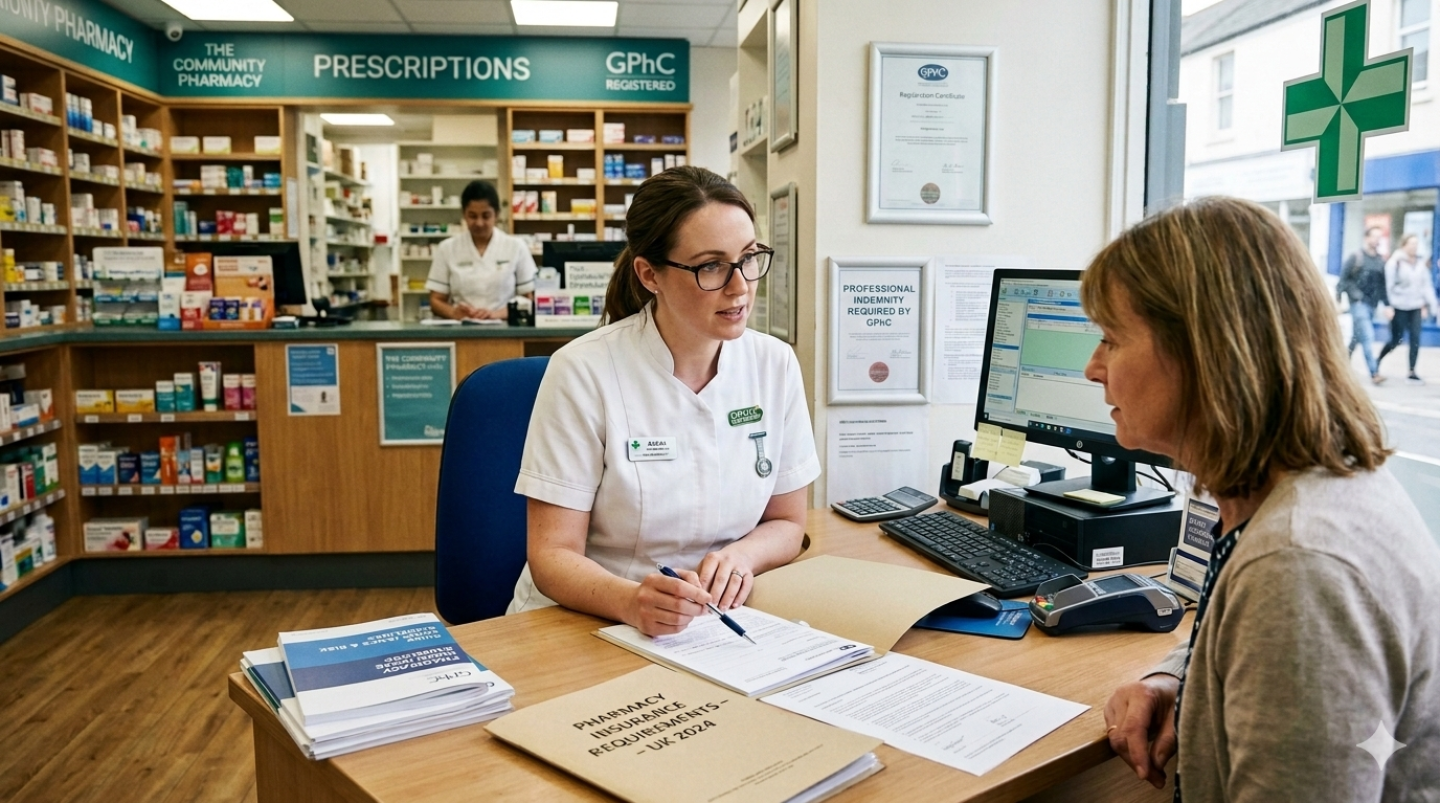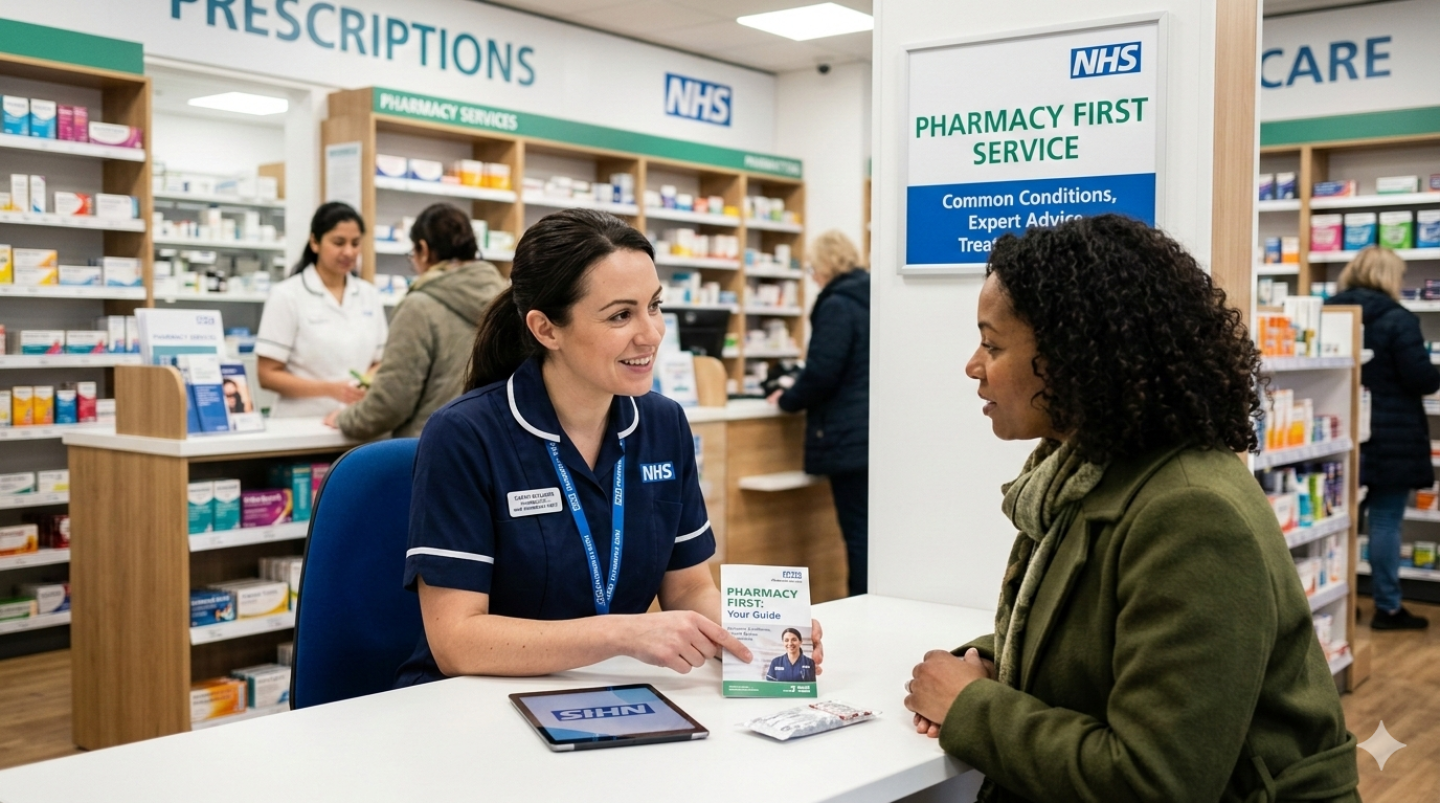
The NHS Pharmacy First service represents one of the most significant expansions of community pharmacy clinical services in England. Introduced in January 2024, the service allows patients to access treatment for common conditions directly from their local pharmacy without needing to see a GP.
For community pharmacies, Pharmacy First provides both new clinical opportunities and additional NHS funding, while helping reduce pressure on GP surgeries and urgent care services.
This guide explains how the service works, the conditions included, consultation requirements, and how pharmacies are paid.
What Is the NHS Pharmacy First Service?
Pharmacy First allows community pharmacists to assess and treat patients for seven common conditions under defined clinical pathways.
Patients can access the service in two main ways:
- Self-referral (walk-in) – patients visit the pharmacy directly
- NHS referrals – from GP practices, NHS 111, or urgent care providers
The aim is to enable pharmacies to manage minor illnesses safely and efficiently, while freeing up GP appointments for more complex cases.
The service forms part of the NHS Primary Care Recovery Plan, which seeks to expand the role of community pharmacy in frontline care.
Conditions Covered by Pharmacy First
Pharmacists can supply medicines under Patient Group Directions (PGDs) for seven clinical pathways.
1. Acute Otitis Media (Ear Infection)
Eligible for patients aged 1–17 years.
Pharmacists assess symptoms and may supply antibiotics where clinically appropriate.
2. Impetigo
A common bacterial skin infection often seen in children.
Treatment may include:
- topical antibiotics
- advice on hygiene and infection control
3. Infected Insect Bites
Pharmacists assess signs of infection such as:
- redness
- swelling
- warmth
- pain
Antibiotics may be supplied under the clinical pathway if required.
4. Shingles
For adults aged 18 years and over, pharmacists can assess suspected shingles and provide antiviral medication when appropriate.
Early treatment is important to reduce complications.
5. Sinusitis
Acute sinusitis in adults can often be managed without GP consultation.
Pharmacists assess symptoms and may provide antibiotics when clinical criteria are met.
6. Sore Throat
The pathway uses clinical scoring systems such as:
- FeverPAIN
- Centor score
This helps determine whether antibiotics are appropriate.
7. Uncomplicated Urinary Tract Infections (UTIs)
Women aged 16–64 years with uncomplicated UTIs may receive treatment following pharmacist assessment.
Red flag symptoms require referral to a GP.
How the Pharmacy First Consultation Works
Pharmacy First consultations must follow defined clinical protocols.
Typical steps include:
- Patient presentation or referral
- Clinical assessment
- Red flag screening
- Clinical pathway evaluation
- Medicine supply (if appropriate)
- Advice and safety netting
- Consultation recording
Consultations are normally recorded using pharmacy IT systems such as:
- PharmOutcomes
- Sonar
- Cegedim Pharmacy Services
These systems also enable referrals from NHS 111 and GP practices.
Pharmacy First Payments and Funding
Community pharmacies receive payments through two components.
Monthly Fixed Payment
Pharmacies must deliver a minimum number of consultations per month to receive the full monthly payment.
The payment is part of the Community Pharmacy Contractual Framework (CPCF).
Consultation Fees
Pharmacies receive a consultation fee per completed clinical pathway consultation.
The exact payment amounts may change as NHS England updates the service framework, so contractors should always verify the latest guidance.
Requirements for Pharmacies to Deliver the Service
To provide Pharmacy First, pharmacies must meet several requirements.
These include:
- A consultation room compliant with GPhC standards
- Appropriate SOPs and clinical governance
- Access to the required IT systems
- Pharmacists trained on the clinical pathways
- Ability to record consultations and referrals
Many pharmacies integrate Pharmacy First into their wider clinical services such as:
- blood pressure checks
- contraception services
- smoking cessation support
Benefits for Community Pharmacy
Pharmacy First offers several advantages for pharmacy businesses.
Expanded Clinical Role
Pharmacists can utilise their clinical skills to manage common conditions safely.
Increased Footfall
Patients who may previously have visited GP surgeries are now directed to pharmacies.
Additional Revenue
The service provides new NHS funding streams through consultation payments.
Stronger NHS Integration
Pharmacies become more integrated within the primary care network ecosystem.
Challenges Pharmacies Face
Despite the opportunities, implementation has presented challenges.
Common issues include:
- managing increased workload
- ensuring pharmacist training across all pathways
- integrating referral systems
- balancing dispensing workload with consultations
Pharmacies that streamline their workflow and consultation process are often able to deliver the service more efficiently.
The Future of Pharmacy First
The Pharmacy First service is widely seen as a major shift in NHS primary care delivery.
Future developments may include:
- expansion to additional clinical conditions
- Greater digital referral integration
- enhanced pharmacist prescribing roles
- Further funding linked to clinical outcomes
As community pharmacy evolves, services like Pharmacy First will likely play a central role in how patients access primary care.
FAQ
Pharmacy First currently covers seven conditions: sinusitis, sore throat, ear infections, infected insect bites, impetigo, shingles, and uncomplicated urinary tract infections.
Yes. Patients can walk into participating pharmacies directly without seeing a GP first.
Yes. Patients can walk into participating pharmacies directly without seeing a GP first.
No. Pharmacists follow strict clinical criteria and may provide advice without supplying antibiotics where appropriate.