Vaccine Storage Guidelines for Pharmacies: Cold Chain, Temperature Requirements and Compliance

Vaccine Storage Guidelines for Pharmacies: Cold Chain, Temperature Requirements and Compliance

Vaccine Storage Guidelines for Pharmacies

Vaccination services are now a routine part of community pharmacy operations across the UK, from seasonal flu and COVID-19 programmes to travel vaccines and private immunisation services. Maintaining correct storage conditions is critical to ensure vaccine potency, patient safety and regulatory compliance.

Vaccines are temperature-sensitive biological products. If exposed to temperatures outside their recommended range, their effectiveness may be permanently reduced. This is why strict cold chain management is required throughout transportation, storage and handling within pharmacies.

For pharmacy teams providing vaccination services, understanding the correct fridge temperature requirements, monitoring procedures and cold chain protocols is essential.


Understanding the Vaccine Cold Chain

The vaccine cold chain refers to the controlled temperature system used to store and transport vaccines from the manufacturer to the point of administration.

Every stage of the supply chain must maintain the correct temperature range to ensure vaccines remain effective.

The cold chain typically includes:

  • Pharmaceutical manufacturers
  • Medical wholesalers
  • Pharmacy deliveries
  • Vaccine storage refrigerators
  • Transport to vaccination clinics
  • Administration to patients

If the cold chain is broken at any stage, vaccines may become ineffective even if they still appear normal.

Community pharmacies must therefore implement robust cold chain management procedures as part of their operational and clinical governance processes.


Recommended Vaccine Storage Temperature

Most vaccines used in UK pharmacy vaccination services must be stored between:

+2°C and +8°C

This temperature range applies to many routine vaccines, including:

  • Influenza vaccines
  • COVID-19 vaccines (post-distribution storage)
  • Travel vaccines
  • Routine immunisation vaccines are supplied to healthcare providers

Freezing vaccines can be just as damaging as excessive heat. Many vaccines lose potency if frozen, meaning they must be discarded.

Pharmacies should never store vaccines:

  • Below +2°C
  • Above +8°C
  • In freezer compartments
  • In domestic refrigerators used for food

Maintaining a stable storage environment is therefore essential.


Vaccine Fridge Requirements for Pharmacies

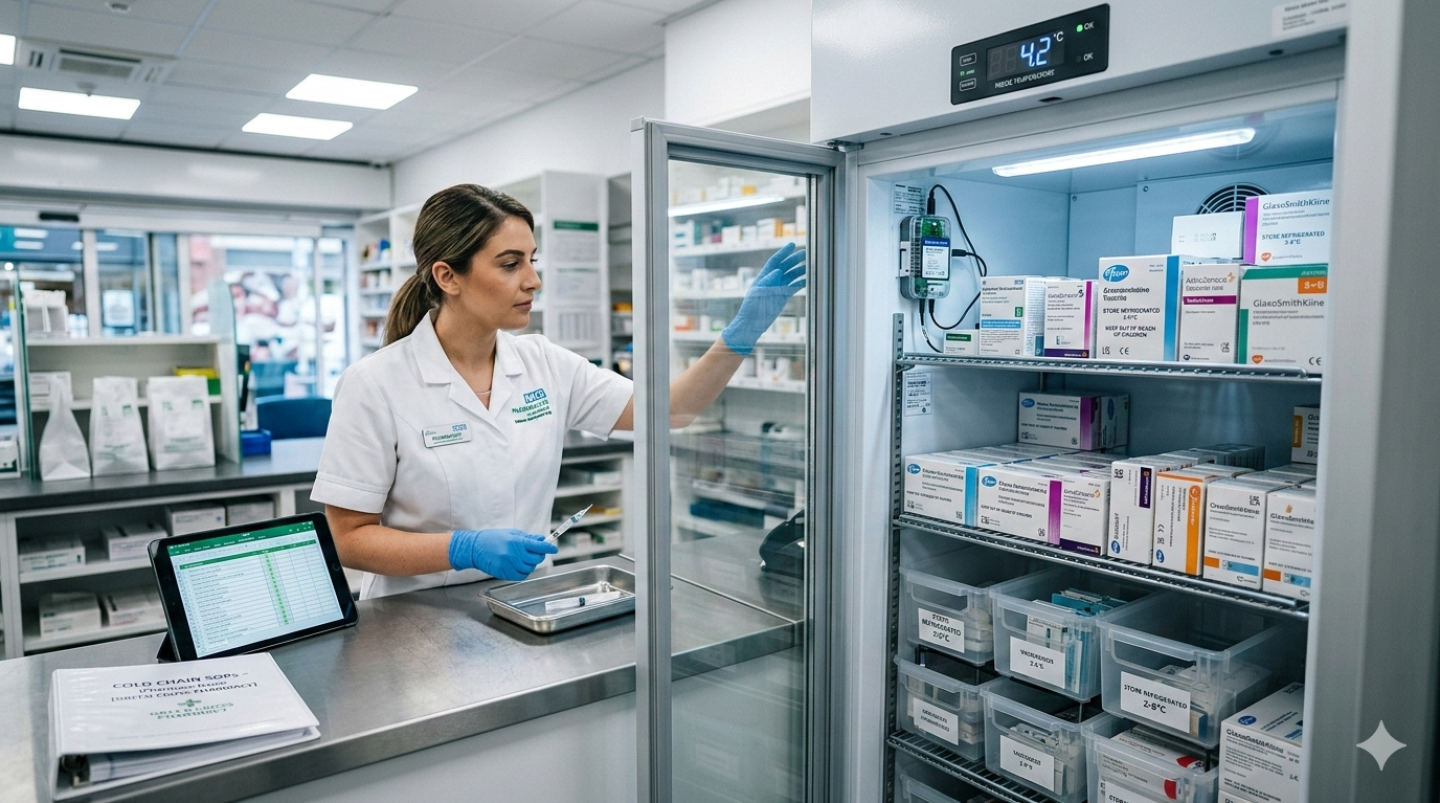
Vaccines should ideally be stored in pharmaceutical-grade vaccine refrigerators rather than standard domestic appliances.

Purpose-built medical refrigerators provide:

  • Consistent temperature control
  • Uniform air circulation
  • Digital temperature monitoring
  • Alarm systems for temperature excursions
  • Secure storage for medicines

Vaccines should be stored:

  • In their original packaging
  • On shelves with air circulation around boxes
  • Away from fridge walls or cooling plates
  • Clearly separated from other medicines

Overloading refrigerators can prevent proper airflow and cause uneven temperatures.


Temperature Monitoring and Record Keeping

Continuous temperature monitoring is essential for vaccine storage compliance.

Pharmacies should monitor refrigerator temperatures using:

  • Digital min/max thermometers
  • Continuous data loggers
  • Temperature monitoring systems with alerts

Temperatures should be recorded at least twice daily in most vaccination settings.

Typical monitoring procedures include:

Morning check:

  • Record current temperature
  • Record minimum and maximum temperatures since the last reset

End-of-day check:

  • Record the current temperature again
  • Reset the min/max thermometer

Records should be retained for inspection as part of pharmacy clinical governance and audit processes.


What to Do if a Cold Chain Breach Occurs

A cold chain breach occurs when vaccines are exposed to temperatures outside the recommended range.

Common causes include:

  • Fridge door left open
  • Equipment malfunction
  • Power failure
  • Incorrect thermostat settings
  • Delivery delays

If a breach occurs, pharmacy teams should:

  1. Quarantine the affected vaccines immediately
  2. Label them “Do Not Use”
  3. Record the temperature incident
  4. Contact the vaccine supplier or relevant authority for advice
  5. Follow internal Standard Operating Procedures (SOPs)

Vaccines should not be used until their suitability has been confirmed.

In many cases, compromised vaccines must be safely disposed of as pharmaceutical waste.


Staff Training and SOP Requirements

Pharmacies providing vaccination services should maintain clear Standard Operating Procedures (SOPs) covering vaccine storage and cold chain management.

SOPs should address:

  • Vaccine receipt and delivery checks
  • Storage procedures
  • Temperature monitoring
  • Cold chain breach management
  • Equipment maintenance
  • Staff responsibilities

All staff involved in vaccination services should receive training on:

  • Vaccine storage requirements
  • Cold chain risks
  • Temperature monitoring procedures
  • Incident reporting

This helps ensure consistent handling of vaccines across the pharmacy team.


Regulatory and Professional Guidance

Pharmacies delivering vaccination services must follow guidance issued by UK healthcare authorities.

Key references include:

UK Health Security Agency – The Green Book (Immunisation Against Infectious Disease)
https://www.gov.uk/government/collections/immunisation-against-infectious-disease-the-green-book

The Green Book provides detailed guidance on:

  • Vaccine storage and distribution
  • Cold chain management
  • Handling vaccines safely

Pharmacy professionals should also be aware of broader medicines storage requirements under MHRA Good Distribution Practice (GDP) guidance.

Further information is available from the Medicines and Healthcare products Regulatory Agency (MHRA):
https://www.gov.uk/guidance/good-distribution-practice-for-medicinal-products

Maintaining correct storage procedures supports both patient safety and regulatory compliance.


Common Vaccine Storage Mistakes in Pharmacies

Even well-run pharmacies occasionally experience cold chain issues. Some common mistakes include:

Using domestic refrigerators

Standard household fridges often have uneven temperature distribution.

Storing vaccines in fridge doors

Door compartments are exposed to frequent temperature fluctuations.

Blocking airflow

Overloaded refrigerators can create warm spots.

Failing to monitor temperatures regularly

Without monitoring, temperature excursions may go unnoticed.

Poor staff training

All staff involved in vaccine handling must understand cold chain procedures.

Avoiding these issues helps protect vaccine potency and patient safety.


The Growing Role of Vaccination Services in Community Pharmacy

Vaccination services continue to expand across the UK pharmacy sector. Community pharmacies now deliver a wide range of immunisation programmes, including:

  • NHS seasonal influenza services
  • COVID-19 booster campaigns
  • Travel vaccination clinics
  • Private vaccination programmes

As these services grow, pharmacies must ensure their cold chain infrastructure, monitoring systems, and SOPs are capable of supporting safe vaccine storage.

Investing in proper equipment, staff training, and clear operational procedures helps pharmacies maintain compliance while delivering high-quality vaccination services.


Frequently Asked Questions

What temperature should vaccines be stored at in pharmacies?

Most vaccines must be stored between +2°C and +8°C to maintain potency and effectiveness.

Can vaccines be stored in a normal fridge?

Vaccines should ideally be stored in a pharmaceutical-grade medical refrigerator designed for medicine storage. Domestic fridges may not maintain stable temperatures.

How often should vaccine fridge temperatures be checked?

Vaccines should ideally be stored in a pharmaceutical-grade medical refrigerator designed for medicine storage. Domestic fridges may not maintain stable temperatures.

What is a vaccine cold chain breach?

A cold chain breach occurs when vaccines are exposed to temperatures outside their recommended storage range.

Cold Chain Storage Requirements for Pharmacies (UK Compliance Guide)

Cold Chain Storage Requirements for Pharmacies (UK Compliance Guide)

What Is the Pharmaceutical Cold Chain?

The pharmaceutical cold chain refers to the controlled temperature environment used to store and transport medicines that must remain within a specific temperature range to maintain their safety, efficacy, and quality.

In UK pharmacy practice, cold chain products typically include:

  • Vaccines
  • Insulin products
  • Certain biologics and monoclonal antibodies
  • Some eye drops and hormone preparations
  • Specialty medicines supplied through hospital or specialist distribution

Most of these medicines must be stored between 2°C and 8°C from the point of manufacture through distribution and dispensing to the patient.

If the temperature moves outside this range, the medicine may become ineffective or unsafe — even if it still appears normal.


Why Cold Chain Compliance Matters in Pharmacies

Failure to maintain the cold chain can result in:

  • Reduced medicine potency
  • Patient safety risks
  • Regulatory breaches
  • Financial losses from stock wastage

For example, vaccines exposed to temperatures outside the recommended range may lose effectiveness, meaning patients may not be protected even after administration.

Pharmacies must therefore operate robust cold chain procedures aligned with MHRA Good Distribution Practice (GDP) and GPhC standards for registered pharmacies.


Temperature Requirements for Pharmacy Refrigerators

Most temperature-sensitive medicines must be stored at:

2°C to 8°C

This range must be maintained continuously within pharmacy refrigeration units.

Key requirements include:

  • A dedicated pharmaceutical refrigerator
  • Continuous temperature monitoring
  • Regular temperature checks and documentation
  • Proper stock placement to allow airflow

Domestic fridges are not suitable for storing medicines because they often produce uneven temperature zones and frequent temperature fluctuations.

Pharmaceutical refrigerators are specifically designed to maintain stable internal conditions required for medicine storage.


Monitoring and Recording Refrigerator Temperatures

Temperature monitoring is a critical part of cold chain management in pharmacies.

Typical monitoring procedures include:

Daily temperature checks

Pharmacy staff should record minimum and maximum temperatures at least once daily.

Digital temperature monitoring

Many pharmacies now use:

  • Data loggers
  • Continuous temperature monitoring systems
  • Remote alert systems

These tools automatically record temperature data and notify staff if excursions occur.

Record retention

Temperature logs should be retained according to pharmacy SOPs and may be required during inspections by the General Pharmaceutical Council (GPhC).


Handling Temperature Excursions

A temperature excursion occurs when the refrigerator temperature moves outside the required range (2°C–8°C).

When this happens, pharmacies should follow a documented SOP.

Typical steps include:

  1. Quarantine affected stock
  2. Identify the duration and extent of the excursion
  3. Consult manufacturer stability guidance
  4. Contact wholesalers or manufacturers if required
  5. Document the incident

Medicines should not be supplied until their suitability for use has been confirmed.

Some products can tolerate short excursions, while others must be discarded.


Best Practices for Pharmacy Cold Chain Storage

Effective cold chain management involves more than simply maintaining the correct temperature.

Pharmacies should implement structured procedures that support consistent compliance.

Use Purpose-Built Pharmacy Refrigerators

A pharmaceutical refrigerator should include:

  • Fan-assisted air circulation
  • Digital temperature display
  • Minimum/maximum temperature recording
  • Alarm systems for temperature deviations

This ensures consistent temperature distribution throughout the unit.


Avoid Overloading the Fridge

Overfilling refrigerators can restrict airflow and cause uneven temperatures.

Medicines should be stored with space between packs to allow proper circulation.

Cold chain products should never be stored in fridge doors, where temperatures fluctuate.


Position the Refrigerator Correctly

Refrigerators should be installed:

  • Away from direct sunlight
  • Away from heat sources
  • In well-ventilated areas
  • With sufficient clearance for airflow

Improper positioning can cause compressor strain and temperature instability.


Maintain Clear SOPs for Staff

All pharmacy staff should understand procedures covering:

  • Cold chain deliveries
  • Temperature checks
  • Temperature excursion handling
  • Refrigerator maintenance
  • Power failure response

These procedures should form part of the pharmacy’s Standard Operating Procedures (SOPs).


Cold Chain Management During Medicine Delivery

Temperature-controlled medicines must also be protected during transport and delivery.

Wholesalers typically use:

  • Validated insulated packaging
  • Temperature-controlled logistics
  • Time-limited cold packs

Pharmacies should check deliveries immediately upon arrival and place cold chain medicines in the refrigerator without delay.

Online and distance selling pharmacies must also ensure temperature-sensitive medicines remain within specification during patient delivery, which may require specialist packaging and validated courier processes.


Power Failure and Emergency Planning

Pharmacies should maintain a contingency plan for power outages or refrigerator failure.

Emergency planning may include:

  • Backup refrigerators
  • Transfer arrangements with nearby pharmacies
  • Emergency contact lists for wholesalers
  • Alarm systems for temperature alerts

A clear cold chain incident procedure reduces the risk of large-scale stock loss.


UK Regulatory Guidance on Cold Chain Storage

Cold chain handling requirements are supported by several UK regulatory frameworks.

Key guidance includes:

  • MHRA Good Distribution Practice (GDP) guidelines for medicinal products
  • GPhC standards for registered pharmacies relating to safe storage and handling of medicines
  • Public Health guidance for vaccine storage

Authoritative resources include:

Pharmacies are expected to align internal procedures with these standards.


Common Cold Chain Mistakes in Pharmacies

During inspections, regulators frequently identify avoidable cold chain issues such as:

  • Using domestic refrigerators
  • Missing or incomplete temperature records
  • Storing medicines in fridge doors
  • Delays in refrigerating deliveries
  • Lack of SOPs for temperature excursions

Addressing these issues can significantly improve regulatory compliance and patient safety.


Operational Takeaways for Pharmacy Teams

Cold chain storage is a routine but critical part of pharmacy operations. Even small temperature deviations can compromise medicine quality.

Pharmacies should focus on:

  • Reliable pharmaceutical-grade refrigeration
  • Daily temperature monitoring and documentation
  • Clear SOPs for cold chain management
  • Rapid response procedures for excursions
  • Staff training on handling temperature-sensitive medicines

As vaccines, biologics, and specialty medicines continue to expand within pharmacy supply chains, robust cold chain management will remain a core operational responsibility.


Frequently Asked Questions


What temperature should pharmacy refrigerators be set to?

Pharmacy refrigerators should maintain a temperature between 2°C and 8°C, with a typical target set point of around 5°C to allow safe buffer margins.

Can pharmacies use domestic refrigerators for medicines?

Most SOPs require daily temperature recording, including minimum and maximum readings. Many pharmacies now use continuous digital monitoring systems.

How often should pharmacy fridge temperatures be checked?

Most SOPs require daily temperature recording, including minimum and maximum readings. Many pharmacies now use continuous digital monitoring systems.

What should happen if a pharmacy fridge goes above 8°C?

The pharmacy should quarantine affected medicines, assess the duration of the excursion, consult manufacturer guidance, and document the incident before deciding whether the stock can be used.