Education · Registration · Compliance Pharmacy Academy →
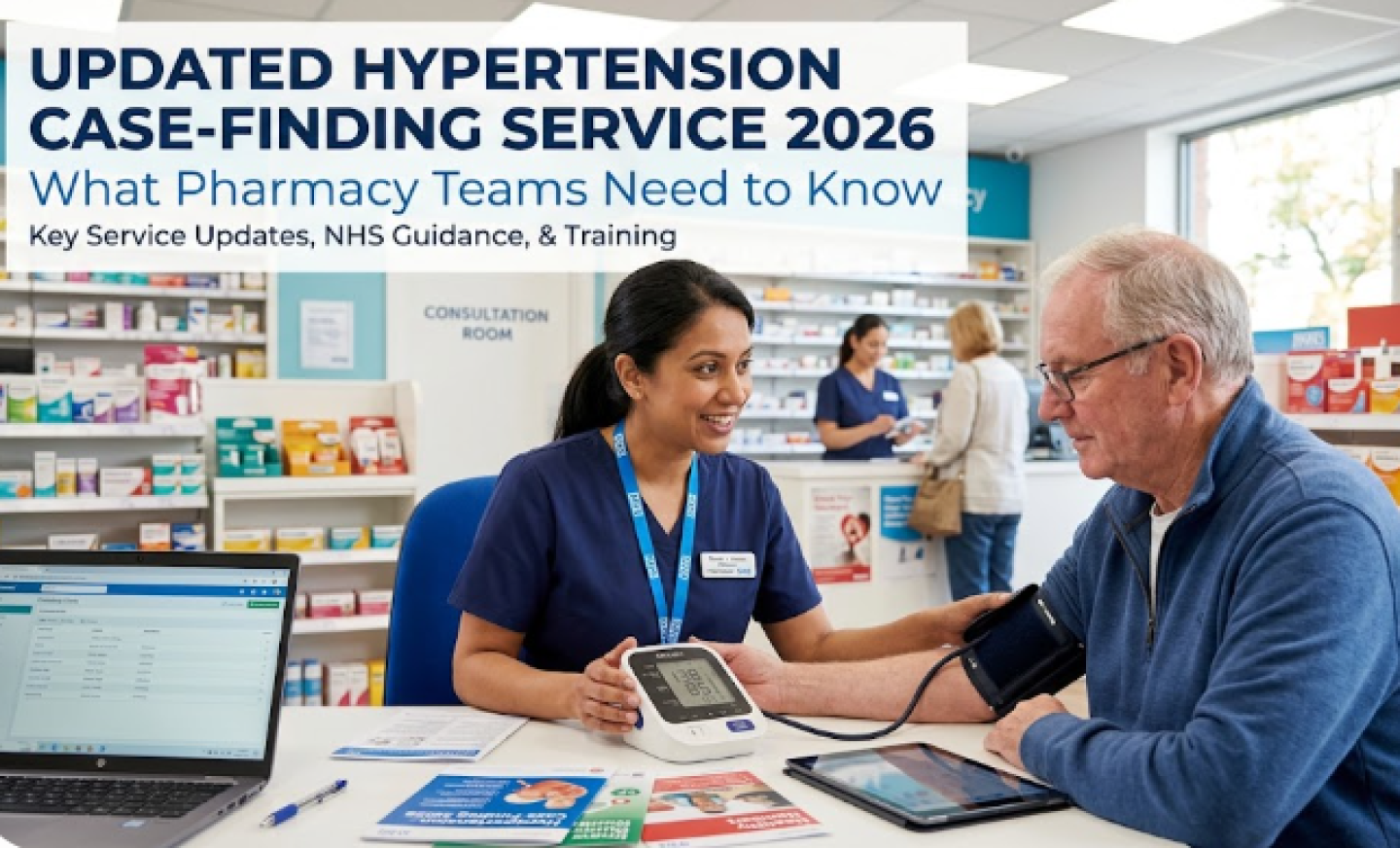
Updated Hypertension Case-Finding Service 2026

Updated Hypertension Case-Finding Service 2026: What Pharmacy Teams Need to Know

Community pharmacies are being asked to do more clinical work than ever, and the latest update to the Hypertension Case-Finding Service is another reminder that the detail matters. NHS England has published a revised service specification, and the changes come into effect on Thursday 3 September 2026, giving pharmacy teams a relatively short window to get ready.

For many pharmacies, this will not mean a complete reset. But it will mean checking processes, updating SOPs, refreshing training, and making sure the whole team understands how the service should now work in practice. If your pharmacy already provides blood pressure checks, this is one of those updates that is easy to overlook but important to act on.

What has changed

The updated Hypertension Case-Finding Service specification was published in August 2026 and agreed as part of the 2025/26 CPCF negotiations. Community Pharmacy England says the changes are the second major update to the service, following earlier changes in December 2023. The new version covers both the clinic blood pressure check element and ABPM, along with updated requirements for records, governance, promotion, referrals, and service delivery.

One of the key things to note is that community pharmacies offering the service must continue to provide both stages where clinically required. That means it is not a “clinic checks only” service; if ABPM is needed, the pharmacy must be set up to deliver it properly.

Why this matters now

This update matters because blood pressure case-finding remains one of the most practical ways community pharmacy can support earlier diagnosis and cardiovascular prevention. Community Pharmacy England states that hypertension is a major risk factor for cardiovascular disease, and that millions of people in England may still have undiagnosed high blood pressure. That gives the service clear public health value, but it also means the standards around delivery need to stay tight.

For pharmacy owners, the practical question is simple: can your team deliver this service smoothly, safely and consistently under the new specification? If the answer is not a confident yes, then this update is a prompt to fix the gaps now rather than later.

Key service points

The service still begins with a clinic blood pressure check for eligible patients, generally adults aged 40 and over without a prior diagnosis of hypertension who have not had their blood pressure checked in the last five years. Where clinically indicated, the second stage is ABPM, with results shared with the patient’s GP practice to support diagnosis and management.

Community Pharmacy England also notes that the service can be signposted by general practice, optometry, and dental colleagues in some cases, which makes local relationships more important than ever. Pharmacies should also remember that the service has specific requirements regarding consultation rooms, equipment, IT systems, record-keeping, and staff training.

What pharmacies should check

The most useful thing a pharmacy can do right now is carry out a quick internal review. Start with the SOP and make sure it reflects the 2026 update, not just the old version. Then check that staff know the correct patient eligibility criteria, the workflow for clinic checks, what to do when ABPM is needed, and how results are shared with the GP practice.

It is also worth checking the practical side of delivery. The service requires a consultation room that meets the relevant standards, validated BP equipment, and an NHS-assured clinical IT system for records and claims. If any of those elements are outdated, missing, or only understood by one person in the business, the pharmacy is exposed to avoidable problems.

Training and team readiness

Community Pharmacy England is clear that staff involved in the service should be familiar with the relevant NICE guidance, the operational process in the specification, and the equipment training provided by the supplier. That means this should not be treated as “common sense” work. It needs proper briefing and documented competence.

The whole pharmacy team can also play a role in promoting the service and recruiting suitable patients. In practice, that means counter staff, support staff, dispensing team members, and pharmacists all need a simple explanation of who is eligible and how to offer the service confidently. A short team huddle is often enough to improve uptake significantly if it is repeated consistently.
Check Pharmacy Academy for related training courses.

Off-site provision and workflow

Another point worth noting is that off-site provision is possible in certain cases, but only with prior agreement and subject to specific limits and governance requirements. That may be useful for pharmacies that want to reach harder-to-access groups, but it should be treated as an operational project rather than a casual add-on.

For most pharmacies, the bigger issue will be workflow. If BP checks are being fitted around busy dispensing periods, the service can easily become inefficient or inconsistent. A good process means knowing when appointments are booked, where the patient waits, how the reading is recorded, how follow-up is handled, and who checks that the GP communication has gone through correctly.

The commercial angle

This update is not just a compliance issue; it is also a reminder that service design matters commercially. Blood pressure checks can be a good service for pharmacies that have the right team, the right room, and the right patient base. But the service only performs well if it is actively managed rather than left to chance.


Community Pharmacy Contract 2026/27: What the New Funding and Prescribing Changes Mean for Your Pharmacy

Community Pharmacy Contract 2026/27: What the New Funding and Prescribing Changes Mean for Your Pharmacy

Community pharmacy in England is entering a new phase in 2026. With a significant funding uplift confirmed and independent prescribing beginning to move into routine community pharmacy services, many owners are now asking the same question: what does this actually mean for my pharmacy on the ground?

For some, the headline figures will be welcome news. For others, the real challenge is less about the announcement itself and more about what has to happen next. Staffing, workflows, training, patient communication and service delivery all need to be aligned if pharmacies are going to benefit from the changes rather than simply absorb more pressure.

What makes this update important is that it is not just a financial story. It is also a signal that community pharmacy is being pushed further into a more clinical role. That creates opportunity, but only for pharmacies that are ready to adapt.

What changed in the 2026/27 contract?

The most significant update is the increase in total funding for the Community Pharmacy Contractual Framework for 2026/27. The settlement takes total funding to £3.636 billion, which is an increase of £340 million compared with the previous year. That is a meaningful rise, and it reflects the continuing importance of community pharmacy within the wider NHS system.

Alongside that, the Single Activity Fee has increased from £1.46 to £1.52. While that may not sound dramatic at first glance, these changes matter when multiplied across high-volume dispensing and service activity over the course of a year. For busy pharmacies, even small adjustments can have a noticeable effect on financial planning and margin.

The government has also confirmed that independent prescribing will be introduced into community pharmacy services from autumn 2026, starting with Pharmacy First and the pharmacy contraception service. That is a major shift and one that will affect how pharmacies think about service delivery, staff capability and the role of the pharmacist in the future.

Why this matters to pharmacy owners

For many owners, the first reaction to contract news is to focus on the money. That is understandable, because funding pressures have been one of the biggest issues facing the sector for years. But the bigger story here is operational.

A pharmacy that is already stretched on staffing, workflow and service capacity may not feel the benefit of funding changes unless it can actually deliver more efficiently. If team members are unclear about new service pathways, if SOPs are out of date, or if the pharmacist is already overloaded, the practical gain can disappear very quickly.

This is why the 2026/27 changes should be treated as a business planning issue as much as a clinical one. The pharmacies that benefit most will usually be the ones that prepare early, organise their teams properly and make decisions about service delivery before the pressure arrives.

Independent prescribing is the bigger shift

The introduction of NHS-funded independent prescribing into community pharmacy is probably the most important long-term change in this announcement. It moves pharmacy further along the path from supply-led care to clinically led care.

In practice, that means more pharmacies will need to think about whether they have the right people, processes and systems in place to support prescribing activity. It also means that pharmacists who have invested in prescribing qualifications may increasingly become central to the commercial and clinical future of the business.

For owners, this creates a number of questions. Which services can realistically be expanded? Which team members need further training? What changes are needed to consultation room use, patient booking, documentation and follow-up? These are not small questions, and the pharmacies that ignore them may find themselves behind more agile competitors.

What you should do now

If you run a community pharmacy, this is a good time to step back and review the basics. The contract changes are an opportunity, but only if the business is set up to use them properly.

Start by reviewing your current service model. Look at how much time your team is already spending on dispensing, prescriptions, queries, and existing services. Then ask where extra capacity could realistically come from. Sometimes the answer is process improvement rather than extra staff. In other cases, it may mean rethinking rotas, extending training, or bringing in more support.

It is also worth checking your SOPs and training records now, rather than waiting until a new service is live. If independent prescribing or additional clinical activity is going to play a bigger role in your pharmacy, your governance needs to be ready for that shift. That includes documentation, patient communication, referral pathways and staff understanding of what they can and cannot do.

Training and governance will matter more

A change like this does not just affect income. It affects accountability. As pharmacies take on more clinical work, the standard of governance behind that work becomes even more important.

That means staff training should be tied to the services you actually want to deliver. If you plan to make more use of Pharmacy First, prescribing, contraception or related clinical pathways, your team should understand the service rules, the escalation points and the patient journey from the outset. A vague awareness of the service is not enough.

It is also sensible to review whether your current training approach is helping or hindering you. A pharmacy that relies on informal knowledge transfer may struggle to scale new services safely. A pharmacy with clear, trackable training and simple internal processes is much more likely to turn contract changes into something useful.

The commercial opportunity

There is a commercial opportunity here, but it is not automatic. A better-funded contract does not guarantee a better business if the pharmacy is still running inefficiently.

The opportunity comes from being able to handle clinical services more confidently, make better use of pharmacist skills and build a stronger relationship with patients. Pharmacies that can deliver services smoothly and professionally are better placed to improve retention, reputation and long-term value.

This is especially relevant for independents. Larger chains may have more internal infrastructure, but smaller pharmacies can often move faster if they are well organised. The key is to be realistic. Do not try to do everything at once. Focus on the services that fit your team, your location and your patient base.

What to watch next

This contract settlement is unlikely to be the final word. There will almost certainly be more detail, interpretation and operational guidance as implementation continues. That means pharmacy owners should keep an eye on further announcements, service specifications and any practical guidance around prescribing, claims and delivery.

The best approach is to treat this as the start of a transition, not the end of one. Pharmacies that wait until everything is fully settled may find themselves rushing to catch up. Those that start preparing now will be in a much stronger position.

Community pharmacy pressures 2026: what the new survey really means for UK pharmacies

Community Pharmacy Pressures 2026: Why 75% of Pharmacies Are Losing Money – And What To Do Next

Community pharmacies across England are under intense financial and operational pressure, and the latest Pharmacy Pressures Survey from Community Pharmacy England (CPE) confirms how serious the situation has become.
Despite a headline funding uplift for the Community Pharmacy Contractual Framework (CPCF), many contractors are struggling to stay viable while maintaining safe, high‑quality care for patients.

Headline findings: most pharmacies are losing money

The 2026 Pharmacy Pressures Survey gathered responses from more than 2,900 pharmacy owners and around 900 pharmacy team members across England, giving a robust picture of what is happening on the ground.
According to the survey, 75% of community pharmacies are currently losing money and only 14% report being profitable, highlighting a widespread sustainability crisis in the sector.

The survey and subsequent analysis also found:

  • Around 99% of respondents said NHS reimbursement prices do not cover the cost of medicines, meaning many items are dispensed at a loss.
  • Rising staffing costs were reported as a key pressure by roughly 95% of respondents, reflecting real‑world inflation in wages and employment costs.
  • A significant minority of owners have had to take drastic measures, with about one‑quarter (25%) reporting that they took no salary or income in the past year.

These findings are being used by CPE to brief MPs and the national media, underlining that the current funding and reimbursement arrangements are not sustainable for a large portion of the network.cpe.org+3

Operational impact: reduced hours, fewer services and staff pressure

Financial pressure is translating directly into operational changes that patients can see and feel.
Survey data and follow‑up commentary show that many pharmacies have reduced opening hours and scaled back some services in an effort to cope with cost pressures and workload.

Examples highlighted include:

  • A substantial proportion of pharmacies reducing their opening hours over the past year, with more planning further reductions.
  • Some pharmacies reporting they have had to stop or limit services such as vaccinations and Pharmacy First due to staffing and financial constraints.
  • Reports of redundancies and difficulty replacing staff, compounding pressure on remaining team members.

For pharmacy teams, the cumulative effect is long, demanding days, worry about job security and increasing stress as they try to balance patient care with growing administrative and procurement burdens.

Daily medicine shortages: patients feeling the impact

Medicine shortages are no longer an occasional inconvenience; they have become a daily reality for many pharmacies and their patients.
The survey findings show that medicine supply problems are now one of the most significant drivers of pressure in community pharmacy.

Key points from the survey and commentary include:

  • 86–88% of pharmacies report spending more time sourcing medicines than in previous years, with teams routinely contacting multiple suppliers and searching for alternatives.
  • Many pharmacy team members say patients are making repeat visits to multiple pharmacies to obtain medicines or seek advice, increasing frustration and anxiety.
  • A large majority of respondents report direct impacts on patient care, including longer waits, delays to treatment and reduced responsiveness due to time diverted to procurement.

Pharmacists and their teams are often left in the difficult position of spending extra time trying to source medicines, then dispensing at a loss once stock is found, which is clearly unsustainable in the long term.

Funding uplift: 10.3% rise, but is it enough?

Against this backdrop, Government and NHS England have agreed a funding uplift for the Community Pharmacy Contractual Framework (CPCF) for 2026/27.
The settlement will see the community pharmacy funding budget increased by 10.3% for this financial year, taking total CPCF funding to £3.636 billion, an increase of £340 million compared to 2025/26.

This new deal is linked to an expanded role for community pharmacy, including greater involvement in clinical services and independent prescribing under a £340m NHS agreement.
While the uplift is welcome and higher than the overall NHS increase, CPE’s analysis and sector commentary suggest it may still fall short of what is needed to fully address years of under‑funding, inflationary costs and structural reimbursement issues.

For contractors, the key question is whether this settlement will be enough to stabilise finances once growing workloads, Pharmacy First activity, clinical services and prescribing are fully factored in.cpe.

What this means for community pharmacy owners

Taken together, the survey results and funding changes send a clear message: community pharmacies are being asked to do more for patients and the NHS, while still operating under significant financial and operational strain.
CPE has described the findings as a “clear warning to Government” about the risk of further pharmacy closures, particularly in areas with high health need, where loss of a local pharmacy can worsen health inequalities.

For pharmacy owners and superintendents, some of the practical implications include:

  • A need for close monitoring of cash flow, wholesaler bills and reimbursement trends to avoid sudden financial shocks.pharmaceutical-journal+1
  • Careful decisions about opening hours and service mix that balance sustainability with access for patients and contractual obligations.
  • Recognition that team wellbeing and mental health are under pressure, requiring conscious support and realistic workload planning.cpe.

At the same time, there are opportunities to strengthen the business by optimising the mix of NHS and private services, investing in team skills, and tightening governance to make inspections and audits smoother.cpe.org+2

Practical steps: governance, services and staff training

While systemic change on funding and reimbursement will depend on national negotiations, there are practical steps individual pharmacies can take to improve resilience.

1. Strengthen governance and inspection readiness

Robust governance and clear SOPs make it easier to manage pressures safely and demonstrate to the GPhC and NHS that your team is in control.
Ensuring staff understand key principles of GPhC inspection, incident reporting, risk management and documentation can reduce the stress of inspections and support safer day‑to‑day practice.

Linking this back to training, structured courses on GPhC inspection & governance, clinical governance and patient safety can help your team standardise processes even when workload is high.

2. Optimise your services and “Pharmacy First” offer

With Pharmacy First, hypertension case‑finding, flu vaccination and other national services now embedded in the CPCF, pharmacies that actively plan their service mix may be better placed to generate sustainable income.
Focusing on services that match local demand, are operationally achievable with your current staffing and can be delivered efficiently is key to making the most of the new funding environment.cpe.

Training staff in consultation skills, clinical assessment for common conditions and service‑specific protocols (e.g. hypertension case‑finding, antimicrobial stewardship) can build confidence and consistency across the team.

3. Invest in staff skills and role clarity

In a pressured environment, well‑trained teams with clear roles and responsibilities can work more efficiently and handle complexity better.cpe.org+2
Ensuring pharmacy technicians, dispensers and pharmacists have access to structured learning on governance, services and clinical topics helps spread expertise and reduce dependency on a small number of individuals.

Platforms like academy.pharmacys.org, which focus on UK‑specific GPhC inspection readiness, NHS & clinical services and medicines safety, can support pharmacies in building an audit‑ready training plan without having to design all content from scratch.

Using the survey as a conversation starter with stakeholders

CPE is actively encouraging pharmacy owners to use the survey findings in conversations with MPs, local health leaders and the media to raise awareness of the pressures on community pharmacy.
Sharing your local experience, backed up by national data showing that most pharmacies are loss‑making and facing daily medicine shortages, can help reinforce the case for a sustainable future for the sector.

Locally, you can also use the findings as a framework for discussions within your team and with other contractors, focusing on:

  • Where your pharmacy’s experience matches or differs from the national picture.
  • Which pressures are within your control and which require system‑level change.
  • Joint opportunities for collaboration, such as shared service promotion or training initiatives.

Mandatory Training for UK Community Pharmacies (2026 Guide)

What Mandatory Training Do Community Pharmacy Staff Need in the UK?

Mandatory Training for UK Community Pharmacies (2026 Guide)

Mandatory training is one of the easiest ways for a community pharmacy to prove its team is safe, competent and inspection‑ready – but there is no single national “tick‑box” list to follow. Instead, the General Pharmaceutical Council (GPhC) expects pharmacy owners to identify the training their staff need, make sure it happens, and be able to show clear evidence during an inspection.

In this guide, we’ll explain what “mandatory training” usually covers in a UK community pharmacy, how requirements differ by role, how often training should be repeated, and the evidence GPhC inspectors typically look for. We’ll finish with a simple step‑by‑step process you can use to build a training plan and matrix that keeps your whole team compliant and inspection‑ready all year round.assets. Entire Pharmacy staff training can be found on academy.pharmacys.org


Who is responsible for mandatory training in community pharmacy?

The GPhC regulates pharmacies, pharmacists, pharmacy technicians and pharmacy support staff across Great Britain and sets standards for safe and effective care. Those standards make it clear that:

  • Pharmacy owners are responsible for ensuring staff are trained and competent for the roles they perform.
  • Pharmacy professionals must only delegate tasks to people who have the skills and training to carry them out safely.

Recent guidance and inspection frameworks place more emphasis on the pharmacy owner or employer taking ownership of staff training and development, rather than relying on individual pharmacists to manage it informally. GPhC inspection reports and decision‑making frameworks also highlight training as a key factor when deciding whether a pharmacy meets standards.

In practice:

  • The pharmacy owner (or superintendent/head office in larger groups) is responsible for setting training expectations, choosing training providers and maintaining records.
  • The responsible pharmacist is responsible for day‑to‑day supervision and making sure staff actually follow procedures they have been trained in.

What counts as “mandatory training” in community pharmacy?

There is no single official list of mandatory training modules that every pharmacy must complete. Instead, owners are expected to decide what training is necessary based on:

  • The services the pharmacy provides (e.g. NHS services, locally commissioned services).
  • The roles and responsibilities of each team member.
  • Legal and contractual requirements (e.g. data protection, health and safety, PQS domains).

Local professional bodies and commissioners often publish minimum training expectations that pharmacies in their area can use as a baseline. These usually group training into three categories:

  1. Core corporate/legislative training – applies to almost everyone.
  2. Role‑specific training – depends on what each staff member actually does.
  3. Service‑specific training – linked to specific NHS or local services.

1. Core training most community pharmacies treat as mandatory

Most pharmacies treat the following topics as mandatory for all or most staff:

  • Safeguarding: Level 2 (or higher where appropriate) for pharmacists, technicians and other clinical roles; at least awareness training for other staff.
  • Data security / information governance: Including confidentiality, data protection and secure handling of prescription and patient
  • Health and safety: Safe working practices, handling of hazardous substances and incident reporting.
  • Fire safety: Procedures, alarm systems, evacuation routes and use of extinguishers where relevant.
  • Infection prevention and control: Hand hygiene, cleaning protocols and managing infection risks in a pharmacy environment.
  • Equality, diversity and inclusion: Treating patients and colleagues fairly and responding appropriately to their needs.

These topics reflect the legal and professional duty to provide a safe environment for staff and patients and are frequently referenced in inspection reports and good practice examples.

2. Role‑specific mandatory training

The GPhC sets approval requirements for the education and training of pharmacy support staff, including dispensing assistants and medicines counter assistants. In addition, local guidance often specifies what level of accredited training each role should have as a minimum. GPhC Pharmacy training can be found here: https://academy.pharmacys.org/courses

Typical expectations include:

  • Pharmacists
    • Registered with the GPhC after completing an accredited MPharm degree and a foundation training year.cpe
    • Ongoing continuing professional development (CPD) and GPhC revalidation each year.
    • Role‑specific training for advanced services (e.g. independent prescribing, vaccination, and hypertension case‑finding where required).
  • Pharmacy technicians
    • Completion of an approved two‑year vocational qualification and registration with the GPhC.
    • Ongoing CPD and revalidation.
    • Additional competencies where they perform accuracy checking or extended roles.
  • Dispensing assistants / pharmacy assistants
    • Enrolment on or completion of an accredited dispensing assistant or combined MCA/dispensary course within a set period of starting in the role (often within three months).pharmacyregulation
    • Training in safe dispensing, labelling, stock management and error reporting.
  • Medicines counter assistants (MCAs)
    • Accredited medicines counter assistant qualification (often at or towards NVQ/SVQ Level 2) if they advise on or sell medicines.
    • Training in OTC medicines, self‑care, signposting and when to refer to the pharmacist.
  • Accuracy checking technicians or dispensers (ACTs/ACDs)
    • Additional accredited accuracy checking qualification before they perform final accuracy checks.

Local Healthy Living Pharmacy (HLP) requirements may also require at least one health champion (for example, an RSPH Level 2 “Understanding Health Improvement” qualification) and a trained HLP leader.

3. Service‑specific training

If your pharmacy provides NHS or locally commissioned services, there will usually be specific training or competency expectations linked to each one. Examples include: https://academy.pharmacys.org/courses

  • NHS hypertension case‑finding – blood pressure measurement, equipment use, service specification, documentation and referral pathways.
  • Vaccination and immunisation services – anaphylaxis management, basic life support and service‑specific e‑learning or face‑to‑face training.
  • Smoking cessation, sexual health, minor ailments or other commissioned services – service protocols, PGDs, consultation skills and data recording.

Each service specification will normally set out the minimum training and accreditation needed for staff involved in delivering it.extranet.nhsglos.


FAQ: mandatory training by role

Here are some of the questions pharmacy owners and managers commonly ask when working out mandatory training requirements.

“What mandatory training does a new pharmacy assistant need?”

New healthcare assistants or pharmacy assistants who work on the medicines counter are expected to be working towards or have completed an accredited medicines counter assistant qualification, usually at or equivalent to Level 2. If they also work in the dispensary, they should be enrolled on an appropriate dispensing assistant or combined course.

They should also complete core corporate training such as data security, health and safety and safeguarding, ideally within the first few months of employment.

“How soon should new staff start their formal training?”

Local guidance suggests that new support staff should be enrolled on the relevant accredited training within the first three months of starting their role. The pharmacy is also expected to keep an up‑to‑date training matrix showing who is enrolled on which qualification and how far they have progressed, ready for GPhC inspection.

“Do locum pharmacists need the same mandatory training?”

Locum pharmacists must meet the same GPhC professional requirements and revalidation expectations as any other pharmacist. From the pharmacy owner’s perspective, it is good practice to:

  • Check locums have completed key training such as safeguarding and information governance.
  • Provide local induction on SOPs, emergency procedures and high‑risk processes.

Inspectors will expect to see evidence that locums are able to follow the pharmacy’s procedures and that training is not limited to permanent staff only.

“Do delivery drivers need mandatory training?”

Where pharmacies employ delivery drivers or other non‑dispensary staff, they should still receive training relevant to the tasks they carry out. For drivers, this commonly includes:

  • Safe handling and transport of medicines.
  • Confidentiality and data protection when handling prescriptions.
  • Basic safeguarding and lone working procedures.

How often should mandatory training be repeated?

Again, there is no single national timetable, but common patterns across community pharmacies and good practice examples include:assets.

  • Annually
    • Information governance / data security.
    • Health and safety awareness.
    • Fire safety.
    • Infection prevention and control updates.
  • Every 2–3 years (or when guidance changes)
    • Safeguarding refreshers.
    • Equality and diversity.
    • Resuscitation / basic life support (where relevant to services).
  • On service launch or change
    • New NHS or locally commissioned services.
    • Changes to PGDs or service specifications.

Some pharmacies also use quarterly compliance tests or refresher modules via e‑learning platforms to check that staff still understand and follow key procedures. Staff who fail these assessments may be required to repeat the relevant training to demonstrate competence.

The key is being able to justify your chosen schedule based on risk and to show that training is refreshed often enough to remain current and effective.


What training evidence do GPhC inspectors look for?

During an inspection, GPhC teams will look at how you manage staff training and development as part of assessing whether you meet the standards for registered pharmacies. They are particularly interested in whether:

  • Staff have appropriate skills, knowledge and qualifications for their roles or are being properly supervised while in training.
  • There is a structured approach to ongoing training, not just one‑off induction.
  • There is evidence that training translates into safe, consistent practice.

Common types of evidence include:assets.

  • A training matrix or learning‑and‑development log showing which modules, courses or qualifications each staff member has completed and when.
  • Certificates from accredited courses (e.g. MCA, dispensing assistant, NVQ, health champion, AMS or service‑specific training).
  • E‑learning reports showing completion dates and assessment scores.
  • Induction checklists and records of SOP sign‑off.
  • Appraisal or review notes where learning needs and completed training are discussed.

Inspection decision‑making frameworks also mention training when describing situations where standards are not met, such as staff performing tasks without appropriate qualifications or evidence of training.


Step‑by‑step: how to create a mandatory training plan and matrix

If you are starting from scratch, use this simple process to build your mandatory training plan.

1. List your roles and services

Start by listing:

  • Every role in your pharmacy (pharmacist, technician, dispenser, MCA, driver, manager, pre‑reg/foundation trainee).
  • Every NHS or locally commissioned service you provide (e.g. hypertension case‑finding, vaccinations, smoking cessation, minor ailments).

This gives you a clear picture of who does what and which services they support.

2. Decide core and role‑specific training

For each role, decide:

  • Which core modules they must complete (e.g. safeguarding, IG, H&S, fire safety, infection control, equality).
  • Which accredited qualifications they need to work in that role (e.g. MCA, dispensing assistant, ACT, technician).
  • Which service‑specific training they need (e.g. hypertension service course, AMS, vaccination training).

Document your reasoning, as inspectors may ask why you selected particular modules for each role.

3. Build a training matrix and timetable

Create a simple spreadsheet or use an online training system to build a matrix with:

  • Staff names and roles down the side.
  • Required training modules and qualifications across the top.
  • Columns for completion dates, expiry/refresh dates and evidence location (certificate, e‑learning report, etc.).

Add a column for “due date” so you can easily see which modules are overdue or coming up for renewal.

4. Keep records up to date

Make sure your matrix and records are updated whenever:

  • New staff join or change roles.
  • A staff member completes or renews training.
  • You start or stop providing a service.

Regular spot checks and team meetings can help ensure training is completed on time and that any gaps are picked up long before an inspection.

5. Use online training and tracking to make it easier

Many community pharmacies now use online training platforms and e‑learning systems to:

  • Provide role‑specific courses to the whole team.
  • Automatically record completion dates and assessment scores.
  • Generate reports and evidence packs for GPhC inspections.

Linking your mandatory training plan to a structured online CPD programme makes it easier to keep everyone up to date, particularly across multiple branches or large teams. https://academy.pharmacys.org/courses


Quick Q&A recap

Is there an official national list of mandatory training modules?

No. The GPhC sets standards and approves qualifications, but it is up to pharmacy owners to decide which training is necessary based on roles, services and risk. Many local pharmacy bodies publish minimum expectations that you can use as a starting point.

How often should I review my training plan?

At least annually, and whenever you add new services, change your SOPs or after significant incidents that reveal training gaps.

What happens if training is out of date or missing during an inspection?

Inspectors may record that standards are not met, especially if there is evidence that staff are performing tasks they are not trained for, or if there is no clear training plan or records. This can lead to improved action plans and follow‑up visits.

Controlled Drug Requirements: Storage, Registers & SOPs

Controlled Drug Requirements: Storage, Registers & SOPs

Controlled Drug Requirements in UK Pharmacies

Controlled drugs (CDs) remain one of the most heavily regulated areas of pharmacy practice in the UK. Whether operating a community pharmacy, a distance-selling model, or a pharmaceutical warehouse, robust processes around procurement, storage, record keeping, and destruction are essential to meet both legal and professional standards.

For pharmacy owners and superintendent pharmacists, compliance is not just about avoiding enforcement action—it is central to patient safety, governance, and maintaining GPhC registration.


Understanding Controlled Drug Schedules

Controlled drugs are categorised under the Misuse of Drugs Regulations 2001, which divide substances into five schedules based on their therapeutic use and potential for harm.

Key schedules relevant to pharmacy:

  • Schedule 2 (CD):
    Morphine, oxycodone, fentanyl, methylphenidate
    → Full CD requirements apply (register, safe custody, witnessed destruction)
  • Schedule 3 (CD No Register):
    Buprenorphine, midazolam, temazepam
    → No register required, but safe custody rules still apply (with some exemptions)
  • Schedule 4 (Part I & II):
    Benzodiazepines (Part I), anabolic steroids (Part II)
    → Minimal CD requirements in community pharmacy
  • Schedule 5:
    Low-strength preparations (e.g. codeine linctus)
    → Limited regulatory requirements

Understanding which schedule a medicine falls into determines the level of control required across the supply chain.


Controlled Drug Register Requirements

Maintaining an accurate and compliant CD register is a legal requirement for Schedule 2 drugs and certain Schedule 3 drugs (where applicable in specific settings).

Key requirements:

  • Must be a bound or approved electronic register
  • Entries must be made on the day of the transaction or the next day
  • Separate pages required for each drug strength and formulation
  • Entries must be chronological and indelible
  • A running balance must be maintained

Required entry details:

  • Date supplied or received
  • Name and address of supplier or recipient
  • Quantity obtained or supplied
  • Running balance after each transaction
  • Prescription reference (where applicable)

Electronic CD registers are widely used but must meet audit and security standards, including access control and audit trails.


Safe Custody and Storage Requirements

Controlled drugs subject to safe custody must be stored in a locked CD cabinet that complies with regulatory specifications.

Core requirements:

  • CD cabinets must meet the Misuse of Drugs (Safe Custody) Regulations 1973
  • Fixed securely to a wall or floor
  • Access restricted to authorised personnel only
  • Keys must be held securely and access controlled

Pharmacies should implement clear SOPs covering:

  • Key holding responsibilities
  • Shift handover procedures
  • Access logging where appropriate

Failure in safe custody is one of the most common issues identified during GPhC inspections.


Ordering and Requisition Requirements

Schedules 2 and 3 CDs must be obtained using a valid controlled drug requisition.

Key compliance points:

  • Use of approved requisition forms (e.g. FP10CDF in England)
  • Inclusion of:
    • Name, address, and profession of requisitioner
    • Purpose of requisition
    • Total quantity requested

Wholesalers and suppliers must verify requisitions before supply. Pharmacies must retain copies for at least two years.


Dispensing Controlled Drugs

Dispensing CDs carries additional legal and clinical checks.

Prescription requirements (Schedule 2 & 3):

  • Patient name and address
  • Drug name, form, and strength
  • Total quantity in both words and figures
  • Dose instructions
  • Prescriber signature
  • Valid date (28-day validity period)

Pharmacies must also:

  • Confirm prescription authenticity
  • Check for alterations or irregularities
  • Ensure clinical appropriateness

Destruction and Denaturing of Controlled Drugs

Expired or unwanted controlled drugs must be destroyed in accordance with strict procedures.

Key rules:

  • Schedule 2 CDs:
    Must be destroyed in the presence of an authorised witness (e.g. CDAO-appointed person)
  • Schedule 3 & 4 CDs:
    Do not require a witness (in community pharmacy), but must still be denatured appropriately
  • Use of denaturing kits is standard practice

A record of destruction must be kept, including:

  • Drug details
  • Quantity destroyed
  • Date
  • Witness signature (where required)

Standard Operating Procedures (SOPs)

GPhC standards require pharmacies to have robust, up-to-date SOPs covering all aspects of CD management.

Essential SOP areas:

  • Ordering and receipt
  • Storage and access control
  • Dispensing procedures
  • CD register management
  • Stock checks and reconciliation
  • Incident reporting
  • Destruction processes

SOPs should be:

  • Regularly reviewed and version-controlled
  • Read and signed by all relevant staff
  • Aligned with current legislation and best practice

Stock Checks and Governance

Routine CD stock checks are essential for identifying discrepancies early.

Best practice:

  • Weekly balance checks for Schedule 2 CDs
  • Full audit at regular intervals (e.g. monthly)
  • Immediate investigation of discrepancies
  • Documentation of all checks

Unexplained discrepancies must be escalated and may need to be reported to:

  • NHS England Controlled Drugs Accountable Officer (CDAO)
  • GPhC (if serious concerns arise)

Common Compliance Risks in Pharmacy

During inspections, regulators frequently identify:

  • Incomplete or inaccurate CD registers
  • Missing running balances
  • Poor cabinet access control
  • SOPs not followed or outdated
  • Delays in recording transactions
  • Inadequate destruction records

Addressing these proactively reduces regulatory risk and strengthens governance frameworks.


Regulatory References and Guidance

For authoritative guidance, pharmacy teams should refer to:

Including these references within SOP development and training strengthens compliance and inspection readiness.


FAQ: Controlled Drug Requirements

Do all controlled drugs require a register?

No. Only Schedule 2 drugs (and certain settings for Schedule 3) require a CD register. Schedules 4 and 5 do not.

How long must CD records be kept?

Controlled drug registers must be kept for at least 2 years from the date of the last entry.

Who can access the CD cabinet?

Only authorised personnel, typically pharmacists and designated staff, are under strict SOP controls.

Is a witness always required for destruction?

No. A witness is required for Schedule 2 CDs, but not for Schedule 3–5 in community pharmacy.

IELTS and English Language Requirements for Pharmacists in the UK

IELTS and English Language Requirements for Pharmacists in the UK

For pharmacists trained outside the UK, demonstrating strong English language ability is a mandatory step before applying to practise. Clear communication is essential in pharmacy practice — whether counselling patients, collaborating with healthcare professionals, or ensuring safe dispensing.

The General Pharmaceutical Council (GPhC) requires applicants to provide evidence of English language proficiency as part of the pharmacist registration process. Most international pharmacists meet this requirement through recognised language tests such as IELTS or the Occupational English Test (OET).

Understanding these requirements early can help avoid delays during the registration process.


Why English Language Proficiency Is Required

Pharmacists in the UK must communicate accurately with patients, prescribers, and other healthcare professionals. Miscommunication can lead to medication errors or patient safety risks.

Because of this, the GPhC requires pharmacists to demonstrate the ability to:

  • Communicate clearly with patients about medicines and health conditions
  • Understand prescriptions and clinical information
  • Collaborate with doctors, nurses, and other healthcare professionals
  • Maintain accurate records and documentation

English language competency is therefore assessed before registration.


IELTS Requirements for Pharmacists

The International English Language Testing System (IELTS) is the most commonly used test for pharmacists applying to register in the UK.

The GPhC currently requires applicants to achieve the following scores in the IELTS Academic test:

Minimum IELTS scores:

  • Overall score: 7.0
  • Reading: 7.0
  • Listening: 7.0
  • Speaking: 7.0
  • Writing: 6.5

These scores must usually be achieved in a single sitting of the test.

IELTS results are typically valid for two years from the test date when submitting a registration application.


OET (Occupational English Test) Alternative

Some applicants choose the Occupational English Test (OET) instead of IELTS. OET is designed specifically for healthcare professionals and focuses on real-world medical communication scenarios.

For pharmacists, the GPhC requires:

Minimum OET scores:

  • Reading: Grade B
  • Listening: Grade B
  • Speaking: Grade B
  • Writing: Grade C+

Many candidates prefer OET because the test uses pharmacy and healthcare contexts, such as patient consultations or professional documentation.


Who Needs to Take an English Test?

English language testing is generally required for pharmacists who:

  • Qualified outside the UK
  • Are applying through the overseas pharmacist registration route
  • Completed pharmacy education in a non-English speaking country

However, exemptions may apply if the applicant completed pharmacy education in certain countries where English was the primary language of instruction.

Applicants should always check the latest guidance before relying on exemptions.


Evidence Required by the GPhC

When applying for registration, applicants must submit official proof of their English language qualification.

This typically includes:

  • Official IELTS or OET test results
  • Test report number or verification code
  • Evidence that the test was taken within the accepted timeframe

The GPhC may verify test results directly with the testing organisation.


Tips for Achieving the Required IELTS Score

Many pharmacists underestimate the writing and speaking components of IELTS. Preparation is important to reach the required score across all sections.

Helpful preparation strategies include:

1. Focus on healthcare communication
Practice explaining medicines, dosage instructions, and side effects in English.

2. Improve medical vocabulary
Understanding pharmacy terminology improves both the reading and listening sections.

3. Practise timed writing tasks
Many candidates lose marks due to poor time management in the writing section.

4. Take mock tests
Practice tests simulate exam conditions and help identify weaker areas.


Common Mistakes That Delay Applications

Several issues regularly slow down pharmacist registration applications:

  • Submitting expired test results
  • Not meeting minimum scores in each section
  • Taking the wrong IELTS version (General instead of Academic)
  • Failing to submit official documentation

Checking the requirements carefully before submitting an application can prevent delays.


Official Guidance and Regulatory Sources

The English language requirements are set by the General Pharmaceutical Council (GPhC) and may change over time. Applicants should always review the official guidance before preparing their application.

Useful resources include:

These pages provide the most up-to-date information on accepted tests and minimum scores.


Where English Requirements Fit in the UK Pharmacist Pathway

For most overseas pharmacists, English testing is one of the first steps before progressing to:

  • GPhC eligibility assessment
  • Overseas Pharmacist Assessment Programme (OSPAP)
  • Foundation training year
  • GPhC registration assessment

Preparing early for the IELTS or OET requirement helps keep the registration process moving smoothly.


FAQ

What IELTS score do pharmacists need for the UK?

Pharmacists usually need an overall IELTS score of 7.0, with at least 7.0 in reading, listening and speaking, and 6.5 in writing when taking the IELTS Academic test.

Can pharmacists take OET instead of IELTS?

Yes. The Occupational English Test (OET) is accepted by the GPhC for pharmacist registration if the required grades are achieved.

How long is IELTS valid for GPhC registration?

IELTS test results are generally valid for two years when submitting a registration application.

Do EU pharmacists need IELTS?

Some applicants from English-speaking education systems may be exempt, but the GPhC may still require evidence of language proficiency depending on the circumstances.

Vaccine Storage Guidelines for Pharmacies: Cold Chain, Temperature Requirements and Compliance

Vaccine Storage Guidelines for Pharmacies: Cold Chain, Temperature Requirements and Compliance

Vaccine Storage Guidelines for Pharmacies

Vaccination services are now a routine part of community pharmacy operations across the UK, from seasonal flu and COVID-19 programmes to travel vaccines and private immunisation services. Maintaining correct storage conditions is critical to ensure vaccine potency, patient safety and regulatory compliance.

Vaccines are temperature-sensitive biological products. If exposed to temperatures outside their recommended range, their effectiveness may be permanently reduced. This is why strict cold chain management is required throughout transportation, storage and handling within pharmacies.

For pharmacy teams providing vaccination services, understanding the correct fridge temperature requirements, monitoring procedures and cold chain protocols is essential.


Understanding the Vaccine Cold Chain

The vaccine cold chain refers to the controlled temperature system used to store and transport vaccines from the manufacturer to the point of administration.

Every stage of the supply chain must maintain the correct temperature range to ensure vaccines remain effective.

The cold chain typically includes:

  • Pharmaceutical manufacturers
  • Medical wholesalers
  • Pharmacy deliveries
  • Vaccine storage refrigerators
  • Transport to vaccination clinics
  • Administration to patients

If the cold chain is broken at any stage, vaccines may become ineffective even if they still appear normal.

Community pharmacies must therefore implement robust cold chain management procedures as part of their operational and clinical governance processes.


Recommended Vaccine Storage Temperature

Most vaccines used in UK pharmacy vaccination services must be stored between:

+2°C and +8°C

This temperature range applies to many routine vaccines, including:

  • Influenza vaccines
  • COVID-19 vaccines (post-distribution storage)
  • Travel vaccines
  • Routine immunisation vaccines are supplied to healthcare providers

Freezing vaccines can be just as damaging as excessive heat. Many vaccines lose potency if frozen, meaning they must be discarded.

Pharmacies should never store vaccines:

  • Below +2°C
  • Above +8°C
  • In freezer compartments
  • In domestic refrigerators used for food

Maintaining a stable storage environment is therefore essential.


Vaccine Fridge Requirements for Pharmacies

Vaccines should ideally be stored in pharmaceutical-grade vaccine refrigerators rather than standard domestic appliances.

Purpose-built medical refrigerators provide:

  • Consistent temperature control
  • Uniform air circulation
  • Digital temperature monitoring
  • Alarm systems for temperature excursions
  • Secure storage for medicines

Vaccines should be stored:

  • In their original packaging
  • On shelves with air circulation around boxes
  • Away from fridge walls or cooling plates
  • Clearly separated from other medicines

Overloading refrigerators can prevent proper airflow and cause uneven temperatures.


Temperature Monitoring and Record Keeping

Continuous temperature monitoring is essential for vaccine storage compliance.

Pharmacies should monitor refrigerator temperatures using:

  • Digital min/max thermometers
  • Continuous data loggers
  • Temperature monitoring systems with alerts

Temperatures should be recorded at least twice daily in most vaccination settings.

Typical monitoring procedures include:

Morning check:

  • Record current temperature
  • Record minimum and maximum temperatures since the last reset

End-of-day check:

  • Record the current temperature again
  • Reset the min/max thermometer

Records should be retained for inspection as part of pharmacy clinical governance and audit processes.


What to Do if a Cold Chain Breach Occurs

A cold chain breach occurs when vaccines are exposed to temperatures outside the recommended range.

Common causes include:

  • Fridge door left open
  • Equipment malfunction
  • Power failure
  • Incorrect thermostat settings
  • Delivery delays

If a breach occurs, pharmacy teams should:

  1. Quarantine the affected vaccines immediately
  2. Label them “Do Not Use”
  3. Record the temperature incident
  4. Contact the vaccine supplier or relevant authority for advice
  5. Follow internal Standard Operating Procedures (SOPs)

Vaccines should not be used until their suitability has been confirmed.

In many cases, compromised vaccines must be safely disposed of as pharmaceutical waste.


Staff Training and SOP Requirements

Pharmacies providing vaccination services should maintain clear Standard Operating Procedures (SOPs) covering vaccine storage and cold chain management.

SOPs should address:

  • Vaccine receipt and delivery checks
  • Storage procedures
  • Temperature monitoring
  • Cold chain breach management
  • Equipment maintenance
  • Staff responsibilities

All staff involved in vaccination services should receive training on:

  • Vaccine storage requirements
  • Cold chain risks
  • Temperature monitoring procedures
  • Incident reporting

This helps ensure consistent handling of vaccines across the pharmacy team.


Regulatory and Professional Guidance

Pharmacies delivering vaccination services must follow guidance issued by UK healthcare authorities.

Key references include:

UK Health Security Agency – The Green Book (Immunisation Against Infectious Disease)
https://www.gov.uk/government/collections/immunisation-against-infectious-disease-the-green-book

The Green Book provides detailed guidance on:

  • Vaccine storage and distribution
  • Cold chain management
  • Handling vaccines safely

Pharmacy professionals should also be aware of broader medicines storage requirements under MHRA Good Distribution Practice (GDP) guidance.

Further information is available from the Medicines and Healthcare products Regulatory Agency (MHRA):
https://www.gov.uk/guidance/good-distribution-practice-for-medicinal-products

Maintaining correct storage procedures supports both patient safety and regulatory compliance.


Common Vaccine Storage Mistakes in Pharmacies

Even well-run pharmacies occasionally experience cold chain issues. Some common mistakes include:

Using domestic refrigerators

Standard household fridges often have uneven temperature distribution.

Storing vaccines in fridge doors

Door compartments are exposed to frequent temperature fluctuations.

Blocking airflow

Overloaded refrigerators can create warm spots.

Failing to monitor temperatures regularly

Without monitoring, temperature excursions may go unnoticed.

Poor staff training

All staff involved in vaccine handling must understand cold chain procedures.

Avoiding these issues helps protect vaccine potency and patient safety.


The Growing Role of Vaccination Services in Community Pharmacy

Vaccination services continue to expand across the UK pharmacy sector. Community pharmacies now deliver a wide range of immunisation programmes, including:

  • NHS seasonal influenza services
  • COVID-19 booster campaigns
  • Travel vaccination clinics
  • Private vaccination programmes

As these services grow, pharmacies must ensure their cold chain infrastructure, monitoring systems, and SOPs are capable of supporting safe vaccine storage.

Investing in proper equipment, staff training, and clear operational procedures helps pharmacies maintain compliance while delivering high-quality vaccination services.


Frequently Asked Questions

What temperature should vaccines be stored at in pharmacies?

Most vaccines must be stored between +2°C and +8°C to maintain potency and effectiveness.

Can vaccines be stored in a normal fridge?

Vaccines should ideally be stored in a pharmaceutical-grade medical refrigerator designed for medicine storage. Domestic fridges may not maintain stable temperatures.

How often should vaccine fridge temperatures be checked?

Vaccines should ideally be stored in a pharmaceutical-grade medical refrigerator designed for medicine storage. Domestic fridges may not maintain stable temperatures.

What is a vaccine cold chain breach?

A cold chain breach occurs when vaccines are exposed to temperatures outside their recommended storage range.

Cold Chain Storage Requirements for Pharmacies (UK Compliance Guide)

Cold Chain Storage Requirements for Pharmacies (UK Compliance Guide)

What Is the Pharmaceutical Cold Chain?

The pharmaceutical cold chain refers to the controlled temperature environment used to store and transport medicines that must remain within a specific temperature range to maintain their safety, efficacy, and quality.

In UK pharmacy practice, cold chain products typically include:

  • Vaccines
  • Insulin products
  • Certain biologics and monoclonal antibodies
  • Some eye drops and hormone preparations
  • Specialty medicines supplied through hospital or specialist distribution

Most of these medicines must be stored between 2°C and 8°C from the point of manufacture through distribution and dispensing to the patient.

If the temperature moves outside this range, the medicine may become ineffective or unsafe — even if it still appears normal.


Why Cold Chain Compliance Matters in Pharmacies

Failure to maintain the cold chain can result in:

  • Reduced medicine potency
  • Patient safety risks
  • Regulatory breaches
  • Financial losses from stock wastage

For example, vaccines exposed to temperatures outside the recommended range may lose effectiveness, meaning patients may not be protected even after administration.

Pharmacies must therefore operate robust cold chain procedures aligned with MHRA Good Distribution Practice (GDP) and GPhC standards for registered pharmacies.


Temperature Requirements for Pharmacy Refrigerators

Most temperature-sensitive medicines must be stored at:

2°C to 8°C

This range must be maintained continuously within pharmacy refrigeration units.

Key requirements include:

  • A dedicated pharmaceutical refrigerator
  • Continuous temperature monitoring
  • Regular temperature checks and documentation
  • Proper stock placement to allow airflow

Domestic fridges are not suitable for storing medicines because they often produce uneven temperature zones and frequent temperature fluctuations.

Pharmaceutical refrigerators are specifically designed to maintain stable internal conditions required for medicine storage.


Monitoring and Recording Refrigerator Temperatures

Temperature monitoring is a critical part of cold chain management in pharmacies.

Typical monitoring procedures include:

Daily temperature checks

Pharmacy staff should record minimum and maximum temperatures at least once daily.

Digital temperature monitoring

Many pharmacies now use:

  • Data loggers
  • Continuous temperature monitoring systems
  • Remote alert systems

These tools automatically record temperature data and notify staff if excursions occur.

Record retention

Temperature logs should be retained according to pharmacy SOPs and may be required during inspections by the General Pharmaceutical Council (GPhC).


Handling Temperature Excursions

A temperature excursion occurs when the refrigerator temperature moves outside the required range (2°C–8°C).

When this happens, pharmacies should follow a documented SOP.

Typical steps include:

  1. Quarantine affected stock
  2. Identify the duration and extent of the excursion
  3. Consult manufacturer stability guidance
  4. Contact wholesalers or manufacturers if required
  5. Document the incident

Medicines should not be supplied until their suitability for use has been confirmed.

Some products can tolerate short excursions, while others must be discarded.


Best Practices for Pharmacy Cold Chain Storage

Effective cold chain management involves more than simply maintaining the correct temperature.

Pharmacies should implement structured procedures that support consistent compliance.

Use Purpose-Built Pharmacy Refrigerators

A pharmaceutical refrigerator should include:

  • Fan-assisted air circulation
  • Digital temperature display
  • Minimum/maximum temperature recording
  • Alarm systems for temperature deviations

This ensures consistent temperature distribution throughout the unit.


Avoid Overloading the Fridge

Overfilling refrigerators can restrict airflow and cause uneven temperatures.

Medicines should be stored with space between packs to allow proper circulation.

Cold chain products should never be stored in fridge doors, where temperatures fluctuate.


Position the Refrigerator Correctly

Refrigerators should be installed:

  • Away from direct sunlight
  • Away from heat sources
  • In well-ventilated areas
  • With sufficient clearance for airflow

Improper positioning can cause compressor strain and temperature instability.


Maintain Clear SOPs for Staff

All pharmacy staff should understand procedures covering:

  • Cold chain deliveries
  • Temperature checks
  • Temperature excursion handling
  • Refrigerator maintenance
  • Power failure response

These procedures should form part of the pharmacy’s Standard Operating Procedures (SOPs).


Cold Chain Management During Medicine Delivery

Temperature-controlled medicines must also be protected during transport and delivery.

Wholesalers typically use:

  • Validated insulated packaging
  • Temperature-controlled logistics
  • Time-limited cold packs

Pharmacies should check deliveries immediately upon arrival and place cold chain medicines in the refrigerator without delay.

Online and distance selling pharmacies must also ensure temperature-sensitive medicines remain within specification during patient delivery, which may require specialist packaging and validated courier processes.


Power Failure and Emergency Planning

Pharmacies should maintain a contingency plan for power outages or refrigerator failure.

Emergency planning may include:

  • Backup refrigerators
  • Transfer arrangements with nearby pharmacies
  • Emergency contact lists for wholesalers
  • Alarm systems for temperature alerts

A clear cold chain incident procedure reduces the risk of large-scale stock loss.


UK Regulatory Guidance on Cold Chain Storage

Cold chain handling requirements are supported by several UK regulatory frameworks.

Key guidance includes:

  • MHRA Good Distribution Practice (GDP) guidelines for medicinal products
  • GPhC standards for registered pharmacies relating to safe storage and handling of medicines
  • Public Health guidance for vaccine storage

Authoritative resources include:

Pharmacies are expected to align internal procedures with these standards.


Common Cold Chain Mistakes in Pharmacies

During inspections, regulators frequently identify avoidable cold chain issues such as:

  • Using domestic refrigerators
  • Missing or incomplete temperature records
  • Storing medicines in fridge doors
  • Delays in refrigerating deliveries
  • Lack of SOPs for temperature excursions

Addressing these issues can significantly improve regulatory compliance and patient safety.


Operational Takeaways for Pharmacy Teams

Cold chain storage is a routine but critical part of pharmacy operations. Even small temperature deviations can compromise medicine quality.

Pharmacies should focus on:

  • Reliable pharmaceutical-grade refrigeration
  • Daily temperature monitoring and documentation
  • Clear SOPs for cold chain management
  • Rapid response procedures for excursions
  • Staff training on handling temperature-sensitive medicines

As vaccines, biologics, and specialty medicines continue to expand within pharmacy supply chains, robust cold chain management will remain a core operational responsibility.


Frequently Asked Questions


What temperature should pharmacy refrigerators be set to?

Pharmacy refrigerators should maintain a temperature between 2°C and 8°C, with a typical target set point of around 5°C to allow safe buffer margins.

Can pharmacies use domestic refrigerators for medicines?

Most SOPs require daily temperature recording, including minimum and maximum readings. Many pharmacies now use continuous digital monitoring systems.

How often should pharmacy fridge temperatures be checked?

Most SOPs require daily temperature recording, including minimum and maximum readings. Many pharmacies now use continuous digital monitoring systems.

What should happen if a pharmacy fridge goes above 8°C?

The pharmacy should quarantine affected medicines, assess the duration of the excursion, consult manufacturer guidance, and document the incident before deciding whether the stock can be used.

MHRA Compliance for UK Pharmacies

MHRA Compliance for UK Pharmacies

For pharmacies operating in the United Kingdom, regulatory compliance is not optional — it is fundamental to patient safety, legal operation, and professional standards. While the General Pharmaceutical Council (GPhC) regulates pharmacy premises and professionals, the Medicines and Healthcare products Regulatory Agency (MHRA) oversees the safety, quality, manufacture, import, and distribution of medicines and medical devices.

Understanding MHRA compliance requirements is essential for community pharmacies, online pharmacies, pharmaceutical wholesalers, and logistics providers involved in the medicines supply chain.

This guide explains the role of the MHRA, what pharmacies must comply with, and practical steps to maintain regulatory standards.


What Is the MHRA?

The Medicines and Healthcare products Regulatory Agency (MHRA) is the UK government body responsible for ensuring that medicines and medical devices meet appropriate standards of safety, quality, and effectiveness.

The MHRA regulates:

  • Medicines manufacturing
  • Wholesale distribution
  • Import and export of medicines
  • Pharmacovigilance and adverse event reporting
  • Medical devices
  • Clinical trials

Pharmacies interact with MHRA regulation primarily through medicines procurement, storage, distribution, and safety reporting obligations.

Official guidance can be found on the UK government website:
https://www.gov.uk/government/organisations/medicines-and-healthcare-products-regulatory-agency


Why MHRA Compliance Matters for Pharmacies

MHRA compliance ensures that medicines reaching patients are authentic, safe, and handled correctly throughout the supply chain.

Failure to comply with MHRA regulations can lead to:

  • Enforcement actions
  • Suspension of licences
  • Product recalls
  • Criminal penalties
  • Loss of patient trust

In many cases, pharmacies operate within a regulated medicines supply chain, meaning their suppliers, wholesalers, and distributors must all follow MHRA-approved procedures.


Key MHRA Requirements That Affect UK Pharmacies

1. Sourcing Medicines from Licensed Suppliers

Pharmacies must ensure that medicines are obtained from legally authorised wholesalers or manufacturers.

Suppliers should hold the appropriate licence, such as:

  • Wholesale Dealer Licence (WDA(H))
  • Manufacturer’s Licence
  • Marketing Authorisation Holder approval

This requirement helps prevent falsified medicines from entering the UK supply chain.

More information is available in MHRA guidance on wholesale distribution:
https://www.gov.uk/guidance/apply-for-wholesale-dealer-licence-for-medicines


2. Good Distribution Practice (GDP)

Pharmacies involved in distributing medicines to other healthcare providers must comply with Good Distribution Practice (GDP) standards.

GDP ensures medicines are:

  • Stored at correct temperatures
  • Transported safely
  • Protected from contamination or tampering
  • Fully traceable within the supply chain

GDP compliance often applies to:

  • Pharmacy wholesalers
  • Hub-and-spoke dispensing models
  • Distance selling pharmacies shipping medicines to patients

MHRA GDP guidance:
https://www.gov.uk/guidance/good-distribution-practice


3. Medicines Safety and Pharmacovigilance

Pharmacies also contribute to medicine safety monitoring.

Pharmacists and pharmacy teams should report suspected adverse drug reactions through the Yellow Card Scheme, which is operated by the MHRA.

Examples of reportable issues include:

  • Unexpected side effects
  • Faulty medicines
  • Medical device problems
  • Counterfeit products

Yellow Card reporting helps identify safety issues early.

Yellow Card Scheme information:
https://yellowcard.mhra.gov.uk


4. Handling of Controlled Medicines and High-Risk Products

While controlled drugs are primarily regulated through Home Office legislation, MHRA guidance still influences the safe handling and distribution of high-risk medicines.

Pharmacies must ensure:

  • Secure storage procedures
  • Accurate record-keeping
  • Robust supply chain controls

These practices help prevent diversion, fraud, and counterfeit medicines entering the system.


5. Falsified Medicines Protection

The UK previously implemented the Falsified Medicines Directive (FMD) when it was part of the EU. Although the UK left the EU system in 2021, pharmacies are still expected to maintain robust systems to prevent counterfeit medicines from entering the supply chain.

This includes:

  • Purchasing from authorised suppliers
  • Checking product integrity
  • Reporting suspicious medicines

MHRA guidance on falsified medicines and anti-counterfeiting measures continues to evolve.


MHRA Inspections and Enforcement

While community pharmacies are primarily inspected by the GPhC, the MHRA conducts inspections where pharmaceutical activities involve:

  • Wholesale dealing
  • Importation
  • Manufacturing
  • Repackaging or relabelling
  • Pharmaceutical logistics operations

MHRA inspectors review:

  • Quality systems
  • Standard Operating Procedures (SOPs)
  • Storage and temperature monitoring
  • Documentation and traceability
  • Staff training records

Organisations involved in wholesale or manufacturing must demonstrate robust quality management systems.


Best Practices for Maintaining MHRA Compliance

Pharmacy businesses can reduce compliance risks by implementing structured processes.

Maintain Clear Standard Operating Procedures (SOPs)

SOPs should cover:

  • Medicine procurement
  • Supplier verification
  • Cold chain management
  • Product recalls
  • Adverse event reporting

Conduct Regular Internal Audits

Periodic compliance reviews help identify issues before regulatory inspections occur.

Train Pharmacy Staff

Staff should understand:

  • medicine handling procedures
  • storage requirements
  • counterfeit medicine risks
  • reporting processes

Monitor Storage Conditions

Temperature monitoring is essential for many medicines.

Best practices include:

  • calibrated monitoring equipment
  • documented temperature logs
  • alarm systems for excursions

MHRA vs GPhC: Understanding the Difference

A common source of confusion for pharmacy owners is the difference between the MHRA and GPhC.

RegulatorFocus
GPhCPharmacy premises, pharmacists, professional standards
MHRAMedicines safety, manufacturing, wholesale distribution, supply chain

Both regulators play essential roles in maintaining safe pharmaceutical services in the UK.

GPhC guidance:
https://www.pharmacyregulation.org


Common MHRA Compliance Risks in Pharmacies

Some of the most frequent compliance issues include:

  • Buying medicines from unauthorised suppliers
  • Poor temperature monitoring
  • Lack of documented SOPs
  • Inadequate traceability of medicines
  • Failure to report safety issues

Addressing these areas early can significantly reduce regulatory risk.


The Growing Importance of Compliance for Online Pharmacies

With the rapid growth of distance selling pharmacies and online prescribing services, regulatory oversight has increased.

Online pharmacies must ensure:

  • Medicines are sourced correctly
  • Shipping conditions maintain product stability
  • Patient safety checks are conducted
  • Regulatory approvals are maintained

Both the GPhC internet pharmacy logo scheme and MHRA supply chain oversight play key roles in ensuring patient safety in digital pharmacy models.


MHRA Compliance for UK Pharmacies

MHRA compliance is a critical component of safe pharmacy operations in the UK. While many pharmacy professionals associate regulation primarily with the GPhC, the MHRA plays a major role in ensuring that medicines circulating in the healthcare system are safe, legitimate, and properly handled.

By maintaining strong procurement practices, robust SOPs, effective staff training, and clear supply chain controls, pharmacies can meet MHRA expectations and protect both patients and their business operations.

Staying informed about regulatory updates from official sources such as the MHRA and GOV.UK is essential for maintaining long-term compliance.


Frequently Asked Questions

What does the MHRA regulate in pharmacies?

The MHRA regulates medicine safety, manufacturing, wholesale distribution, and pharmacovigilance. Pharmacies interact with MHRA rules mainly through medicine procurement, reporting adverse reactions, and supply chain compliance.

Do all pharmacies need MHRA licences?

Most community pharmacies do not require a separate MHRA licence unless they engage in wholesale distribution, manufacturing, or importing medicines.

What is Good Distribution Practice (GDP)?

GDP is a set of standards that ensure medicines are stored, transported, and handled safely throughout the pharmaceutical supply chain.

Can the MHRA inspect pharmacies?

Yes. The MHRA can inspect organisations involved in wholesale dealing, manufacturing, or medicine distribution activities.

Where can pharmacies find official MHRA guidance?

Official MHRA guidance is available on GOV.UK:
https://www.gov.uk/government/organisations/medicines-and-healthcare-products-regulatory-agency

NHS Pharmacy First Service: A Complete Guide for UK Community Pharmacies

NHS Pharmacy First Service: A Complete Guide for UK Community Pharmacies

The NHS Pharmacy First service represents one of the most significant expansions of community pharmacy clinical services in England. Introduced in January 2024, the service allows patients to access treatment for common conditions directly from their local pharmacy without needing to see a GP.

For community pharmacies, Pharmacy First provides both new clinical opportunities and additional NHS funding, while helping reduce pressure on GP surgeries and urgent care services.

This guide explains how the service works, the conditions included, consultation requirements, and how pharmacies are paid.


What Is the NHS Pharmacy First Service?

Pharmacy First allows community pharmacists to assess and treat patients for seven common conditions under defined clinical pathways.

Patients can access the service in two main ways:

  1. Self-referral (walk-in) – patients visit the pharmacy directly
  2. NHS referrals – from GP practices, NHS 111, or urgent care providers

The aim is to enable pharmacies to manage minor illnesses safely and efficiently, while freeing up GP appointments for more complex cases.

The service forms part of the NHS Primary Care Recovery Plan, which seeks to expand the role of community pharmacy in frontline care.


Conditions Covered by Pharmacy First

Pharmacists can supply medicines under Patient Group Directions (PGDs) for seven clinical pathways.

1. Acute Otitis Media (Ear Infection)

Eligible for patients aged 1–17 years.

Pharmacists assess symptoms and may supply antibiotics where clinically appropriate.


2. Impetigo

A common bacterial skin infection often seen in children.

Treatment may include:

  • topical antibiotics
  • advice on hygiene and infection control

3. Infected Insect Bites

Pharmacists assess signs of infection such as:

  • redness
  • swelling
  • warmth
  • pain

Antibiotics may be supplied under the clinical pathway if required.


4. Shingles

For adults aged 18 years and over, pharmacists can assess suspected shingles and provide antiviral medication when appropriate.

Early treatment is important to reduce complications.


5. Sinusitis

Acute sinusitis in adults can often be managed without GP consultation.

Pharmacists assess symptoms and may provide antibiotics when clinical criteria are met.


6. Sore Throat

The pathway uses clinical scoring systems such as:

  • FeverPAIN
  • Centor score

This helps determine whether antibiotics are appropriate.


7. Uncomplicated Urinary Tract Infections (UTIs)

Women aged 16–64 years with uncomplicated UTIs may receive treatment following pharmacist assessment.

Red flag symptoms require referral to a GP.


How the Pharmacy First Consultation Works

Pharmacy First consultations must follow defined clinical protocols.

Typical steps include:

  1. Patient presentation or referral
  2. Clinical assessment
  3. Red flag screening
  4. Clinical pathway evaluation
  5. Medicine supply (if appropriate)
  6. Advice and safety netting
  7. Consultation recording

Consultations are normally recorded using pharmacy IT systems such as:

  • PharmOutcomes
  • Sonar
  • Cegedim Pharmacy Services

These systems also enable referrals from NHS 111 and GP practices.


Pharmacy First Payments and Funding

Community pharmacies receive payments through two components.

Monthly Fixed Payment

Pharmacies must deliver a minimum number of consultations per month to receive the full monthly payment.

The payment is part of the Community Pharmacy Contractual Framework (CPCF).


Consultation Fees

Pharmacies receive a consultation fee per completed clinical pathway consultation.

The exact payment amounts may change as NHS England updates the service framework, so contractors should always verify the latest guidance.


Requirements for Pharmacies to Deliver the Service

To provide Pharmacy First, pharmacies must meet several requirements.

These include:

  • A consultation room compliant with GPhC standards
  • Appropriate SOPs and clinical governance
  • Access to the required IT systems
  • Pharmacists trained on the clinical pathways
  • Ability to record consultations and referrals

Many pharmacies integrate Pharmacy First into their wider clinical services such as:

  • blood pressure checks
  • contraception services
  • smoking cessation support

Benefits for Community Pharmacy

Pharmacy First offers several advantages for pharmacy businesses.

Expanded Clinical Role

Pharmacists can utilise their clinical skills to manage common conditions safely.


Increased Footfall

Patients who may previously have visited GP surgeries are now directed to pharmacies.


Additional Revenue

The service provides new NHS funding streams through consultation payments.


Stronger NHS Integration

Pharmacies become more integrated within the primary care network ecosystem.


Challenges Pharmacies Face

Despite the opportunities, implementation has presented challenges.

Common issues include:

  • managing increased workload
  • ensuring pharmacist training across all pathways
  • integrating referral systems
  • balancing dispensing workload with consultations

Pharmacies that streamline their workflow and consultation process are often able to deliver the service more efficiently.


The Future of Pharmacy First

The Pharmacy First service is widely seen as a major shift in NHS primary care delivery.

Future developments may include:

  • expansion to additional clinical conditions
  • Greater digital referral integration
  • enhanced pharmacist prescribing roles
  • Further funding linked to clinical outcomes

As community pharmacy evolves, services like Pharmacy First will likely play a central role in how patients access primary care.


FAQ

What conditions are treated under Pharmacy First?

Pharmacy First currently covers seven conditions: sinusitis, sore throat, ear infections, infected insect bites, impetigo, shingles, and uncomplicated urinary tract infections.

Can patients access Pharmacy First without a GP referral?

Yes. Patients can walk into participating pharmacies directly without seeing a GP first.

Are antibiotics always supplied through Pharmacy First?

Yes. Patients can walk into participating pharmacies directly without seeing a GP first.

Are antibiotics always supplied through Pharmacy First?

No. Pharmacists follow strict clinical criteria and may provide advice without supplying antibiotics where appropriate.

For UK Community Pharmacies

Pharmacy Academy

GPhC‑aligned online training for community pharmacists, pharmacy technicians and support staff.

  • Practical CPD courses written by UK pharmacists.
  • Track completions and print inspection‑ready reports.
  • Simple plans for independent and multiple pharmacies.
View Academy Courses See pharmacy training plans →

Powered by Pharmacies.org · Built for Great Britain community pharmacy teams.