
Education · Registration · Compliance Pharmacy Academy →
Pharmacy Insurance Requirements in the UK

Pharmacy Insurance Requirements in the UK

Essential Cover for Pharmacy Owners and Operators

Running a pharmacy involves significant professional responsibility. From handling medicines to providing patient advice and managing staff, pharmacy businesses operate in a highly regulated environment where mistakes, accidents, or unexpected events can have serious consequences.

For this reason, appropriate insurance cover is an essential part of running a safe and compliant pharmacy business. Whether you are opening a new pharmacy or purchasing an existing one, understanding the key insurance requirements helps protect both your business and the patients you serve.

Pharmacy professionals must also meet professional standards set by the General Pharmaceutical Council, which include maintaining appropriate professional indemnity arrangements.


Professional Indemnity Insurance

Professional indemnity insurance is one of the most important forms of cover for pharmacies and pharmacists.

This insurance protects against claims arising from professional errors or negligence. For example, if a dispensing mistake or incorrect advice results in harm to a patient, professional indemnity insurance helps cover legal costs and compensation claims.

All practising pharmacists must have suitable indemnity arrangements in place as part of their professional obligations with the General Pharmaceutical Council.

Many pharmacists obtain this cover through professional organisations such as the Royal Pharmaceutical Society or specialist healthcare insurers.

Pharmacy businesses should ensure that both the pharmacist and the organisation itself are adequately covered.


Public Liability Insurance

Public liability insurance protects your pharmacy if a member of the public suffers injury or property damage while on your premises.

Examples might include:

  • A patient slipping on a wet floor
  • A customer being injured by shelving or displays
  • Accidental damage to a customer’s property

Even relatively minor incidents can lead to legal claims, which is why most pharmacies carry public liability cover as standard business protection.


Employers’ Liability Insurance

If your pharmacy employs staff, employers’ liability insurance is a legal requirement in the UK.

This insurance protects the business if an employee becomes ill or injured as a result of their work.

For example:

  • Workplace injuries
  • Occupational illness
  • Claims related to unsafe working conditions

Employers’ liability insurance is required under UK law and regulated by the Health and Safety Executive.

Most pharmacy businesses will already have this cover in place if they employ dispensers, technicians, counter assistants, or administrative staff.


Business Interruption Insurance

Unexpected events can temporarily force a pharmacy to close or restrict operations.

Business interruption insurance helps cover financial losses caused by events such as:

  • Fire or flood damage
  • Structural damage to the premises
  • Major equipment failure
  • Supply disruptions following insured incidents

Because pharmacies often depend heavily on consistent daily prescription volume, even short interruptions can have a noticeable financial impact.

This type of cover can help replace lost income while the business recovers.


Property and Contents Insurance

Pharmacies typically hold significant amounts of stock and specialist equipment.

Property insurance protects the physical premises and its contents, including:

  • Medicine stock
  • Dispensing equipment
  • Refrigerators and temperature monitoring systems
  • IT systems and patient record software
  • Retail shelving and fixtures

Given the high value of pharmaceutical stock, ensuring accurate stock valuations is important when arranging this cover.


Stock and Controlled Drug Protection

Some insurers offer specialist coverage for pharmaceutical stock, including protection against:

  • Theft
  • Refrigeration failure
  • Temperature excursions
  • Damage during transport

Pharmacies handling controlled drugs should ensure their insurance policy appropriately reflects the value and regulatory requirements associated with these medicines.


Cyber and Data Protection Insurance

Modern pharmacies rely heavily on digital systems for prescription processing, patient records, and communication with healthcare services.

Cyber insurance can help protect against:

  • Data breaches
  • Ransomware attacks
  • System outages
  • Patient data loss

Because pharmacies handle sensitive patient information, cybersecurity protection has become increasingly relevant in recent years.


Choosing the Right Pharmacy Insurance

Pharmacy insurance policies can vary widely depending on the size of the business, services provided, and operational risks.

When reviewing insurance options, it is worth considering:

  • The size and prescription volume of the pharmacy
  • The number of staff employed
  • Whether additional clinical services are offered
  • The value of stock and equipment
  • Whether the premises are owned or leased

Many pharmacy owners work with insurance brokers who specialise in healthcare businesses to ensure they have suitable coverage.


Regularly Reviewing Your Cover

Insurance should not be treated as a one-time purchase. As a pharmacy business grows or introduces new services, its risk profile can change.

Owners should review their insurance arrangements periodically, particularly when:

  • Expanding services such as travel clinics or vaccinations
  • Increasing stock levels
  • Hiring additional staff
  • Moving premises or refurbishing the pharmacy

Keeping insurance arrangements aligned with the business helps ensure protection remains adequate as operations evolve.


Pharmacies operate at the intersection of healthcare, regulation, and retail. Having the right insurance arrangements in place provides essential protection for the business, the pharmacy team, and the patients who rely on safe and reliable pharmaceutical services every day.

Buying an Existing Pharmacy in the UK

Buying an Existing Pharmacy in the UK

A Practical Guide for Pharmacists and Investors

Buying an existing pharmacy can be one of the most effective ways to enter pharmacy ownership. Unlike starting a pharmacy from scratch, an established business already has patients, prescription volume, staff, and operational systems in place.

However, purchasing a pharmacy is a significant financial and professional commitment. Careful research, due diligence, and expert advice are essential to ensure the business is viable and compliant with regulatory requirements.

This guide outlines the key things to consider when buying an existing pharmacy in the UK, including valuation, regulatory checks, and operational considerations.


Why Many Pharmacists Buy Existing Pharmacies

For many first-time owners, buying an established pharmacy offers several advantages.

A functioning pharmacy already has:

  • An NHS contract and patient base
  • Established prescription volume
  • Existing staff and operational procedures
  • Supplier accounts and stock systems
  • Known financial performance

This can make the transition into ownership smoother compared with opening a completely new pharmacy.

In many cases, the previous owner may also provide a short handover period to help the new owner understand how the business operates day to day.


Understanding the NHS Contract

One of the most important assets when buying a community pharmacy is the NHS pharmaceutical services contract.

In England, this is managed through the Pharmaceutical Needs Assessment (PNA) process, which determines whether new pharmacy contracts can be issued in a particular area. As a result, existing contracts often have significant value.

When buying a pharmacy, you are typically purchasing the business assets along with the right to provide NHS pharmaceutical services through the contract held with the NHS England.

Because contracts are location-specific and tightly regulated, it’s important to confirm:

  • The contract is valid and active
  • There are no regulatory restrictions or pending issues
  • The pharmacy has been meeting service obligations

Legal advisors who specialise in pharmacy transactions can help verify these details.


How Pharmacies Are Valued

Pharmacy valuations are usually based on a combination of factors rather than just profit alone.

Common valuation elements include:

Prescription volume
Monthly NHS prescription items often form the core indicator of business stability.

Dispensing income
Revenue from NHS dispensing fees and service payments.

Retail sales
Front-of-shop sales, including over-the-counter medicines and retail products.

Private services
Vaccination services, travel clinics, weight management services, and other clinical offerings.

Location and competition
Proximity to GP surgeries, population density, and nearby pharmacies all influence value.

Many pharmacy sales are priced using a multiple of adjusted net profit, although market conditions and prescription volume also play a significant role.


Conducting Proper Due Diligence

Before completing a purchase, thorough due diligence is essential.

This process usually includes reviewing financial records, regulatory compliance, and operational systems.

Key areas to examine include:

Financial Performance

Request at least three years of accounts and review:

  • Prescription volumes
  • NHS income statements
  • Retail performance
  • Staffing costs
  • Rent and property expenses

A business that looks profitable at first glance may have hidden costs or declining prescription trends.


Regulatory Compliance

Pharmacies must meet professional standards set by the General Pharmaceutical Council.

Buyers should confirm:

  • Recent inspection reports
  • Any compliance concerns
  • Controlled drug procedures
  • Standard Operating Procedures (SOPs)
  • Staff training records

Regulatory issues discovered after purchase can become costly and time-consuming to resolve.


Staffing and Team Structure

Staff are often one of the most valuable assets of an established pharmacy.

Understanding the existing team structure helps you assess operational stability.

Things to review include:

  • Pharmacist rota arrangements
  • Pharmacy technician and dispenser experience
  • Employment contracts
  • Holiday and absence cover
  • Salary commitments

A well-trained team can make ownership far easier during the transition period.


Location and Local Competition

A pharmacy’s location can strongly influence long-term success.

When assessing a potential purchase, consider:

  • Nearby GP surgeries and medical centres
  • Local population growth
  • Residential developments
  • Competing pharmacies nearby
  • Distance selling pharmacies affecting the area

Some buyers spend time observing the pharmacy during busy periods to understand real patient demand and workflow.


Property Considerations

Many pharmacies operate from leased premises.

Before committing to a purchase, review:

  • Lease length and renewal options
  • Rent review clauses
  • Service charges
  • Responsibility for building maintenance

Short leases or unfavourable rent increases can affect long-term profitability.

If the pharmacy property is included in the sale, a separate property valuation is usually required.


Financing the Purchase

Buying a pharmacy often requires external financing, particularly for first-time owners.

Specialist lenders familiar with healthcare businesses are commonly used for pharmacy purchases. Financing options may include:

  • Commercial loans
  • Healthcare sector lending
  • Asset-backed lending

Lenders will typically review the pharmacy’s financial records and projected performance before approving funding.


Transitioning Into Ownership

Once the purchase completes, the early months of ownership are often focused on maintaining stability.

Successful transitions usually involve:

  • Retaining existing staff where possible
  • Maintaining relationships with local GP practices
  • Reviewing operational systems gradually
  • Identifying areas for improvement without making sudden changes

Many new owners take time to observe existing processes before implementing changes.


Practical Advice for First-Time Buyers

Buying a pharmacy is both a professional and business decision. Experienced buyers often recommend:

  • Using solicitors who specialise in pharmacy transactions
  • Working with accountants familiar with NHS pharmacy finances
  • Reviewing prescription trends carefully
  • Visiting the pharmacy multiple times before purchasing
  • Speaking with neighbouring businesses or local healthcare professionals

Small insights gathered during the investigation stage can reveal important details about how the pharmacy operates in practice.


Pharmacy ownership can be a rewarding step for pharmacists who want greater autonomy and the opportunity to build a long-term healthcare business. With careful planning, thorough due diligence, and the right professional support, buying an existing pharmacy can provide a strong foundation for successful ownership.

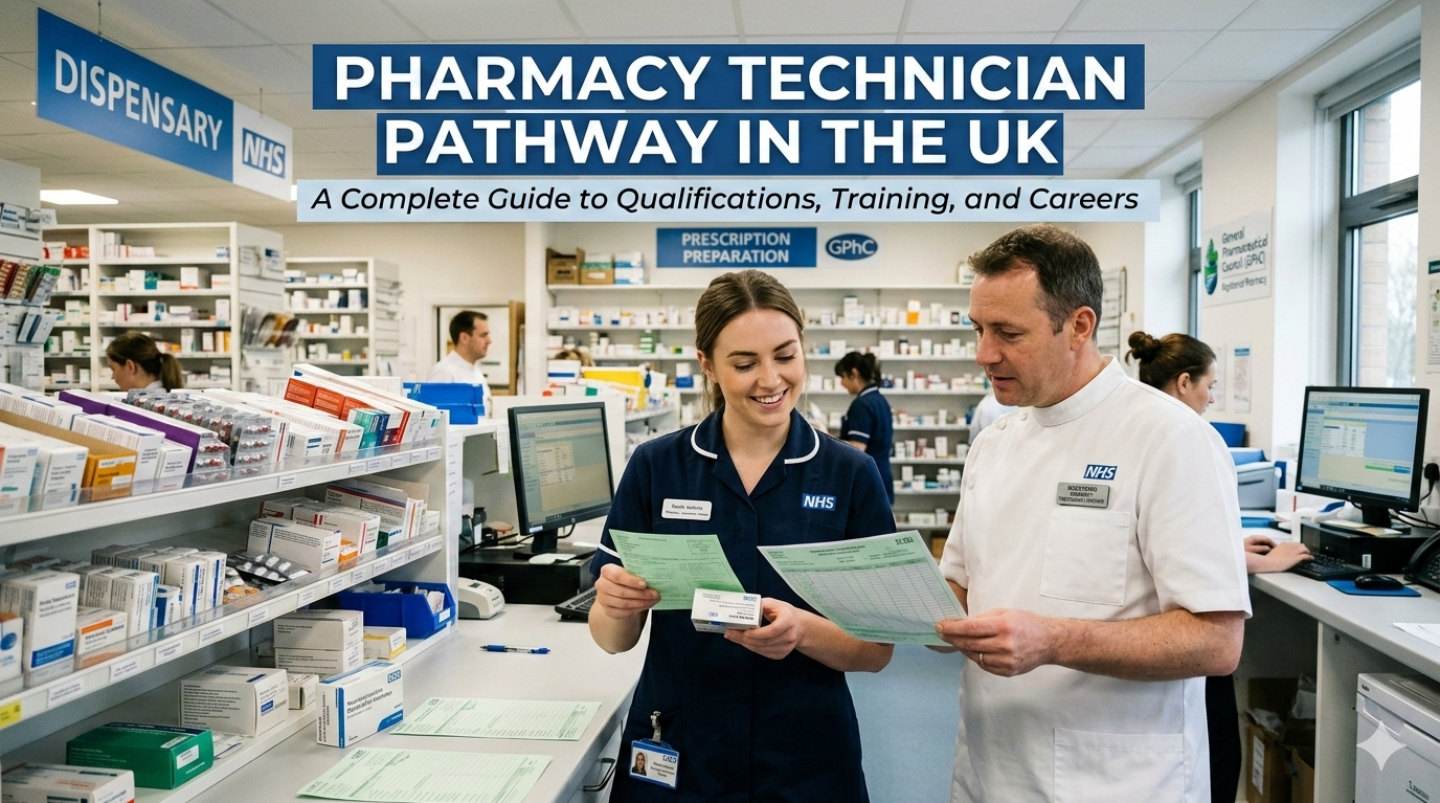
Pharmacy Technician Pathway in the UK

Pharmacy Technician Pathway in the UK

Training, Qualifications and Registration Explained

Pharmacy technicians play an essential role in the safe preparation and supply of medicines. Working alongside pharmacists and other healthcare professionals, they help ensure patients receive the correct medicines, accurate advice, and efficient service.

If you are interested in working in pharmacy but prefer a more practical and technical role, becoming a pharmacy technician can be an excellent career path. In the UK, pharmacy technicians must complete recognised training and register with the General Pharmaceutical Council before practising.


What Does a Pharmacy Technician Do?

Pharmacy technicians support the day-to-day running of pharmacies in a wide range of settings, including community pharmacies, hospitals, GP practices, and pharmaceutical services.

Typical responsibilities include:

  • Preparing and dispensing medicines
  • Managing prescriptions and medication records
  • Supporting pharmacists with clinical services
  • Ordering and managing stock
  • Ensuring medicines are stored correctly
  • Assisting with controlled drug procedures
  • Providing advice on over-the-counter medicines where appropriate

In many pharmacies, technicians are heavily involved in accuracy checking, medicines management, and workflow coordination, which helps pharmacists focus on clinical decision-making and patient care.


The Qualifications Required

To register as a pharmacy technician in the UK, you must complete an approved training programme recognised by the General Pharmaceutical Council.

The most common pathway includes two key qualifications:

Level 3 Diploma in the Principles and Practice for Pharmacy Technicians

and

Level 3 Diploma in Pharmacy Service Skills

These qualifications combine classroom learning with practical training in a pharmacy workplace.

Training usually takes around two years to complete and must be undertaken while working in a pharmacy environment under appropriate supervision.


Entry Requirements

Entry requirements can vary depending on the employer and training provider, but many programmes expect:

  • GCSEs in English, Maths, and Science
  • Strong attention to detail
  • Good communication skills
  • An interest in healthcare and medicines

Some employers recruit trainee pharmacy technicians directly and support them through the full qualification programme.

Others may prefer candidates who already have experience working as a pharmacy assistant or dispensing assistant.


Workplace Training

Pharmacy technician training is largely work-based, meaning trainees gain practical experience while studying.

During training, trainees typically learn how to:

  • Process prescriptions accurately
  • Understand different medicine formulations
  • Manage pharmaceutical stock
  • Maintain pharmacy records
  • Follow legal and regulatory procedures
  • Work safely within Standard Operating Procedures (SOPs)

Because medicines safety is critical, trainees are gradually given greater responsibility as their knowledge and confidence grow.


Registration With the GPhC

After successfully completing the required qualifications and workplace training, candidates can apply to join the register of pharmacy technicians maintained by the General Pharmaceutical Council.

Registration confirms that the technician has met the professional standards required to practise safely.

Registered pharmacy technicians must also:

  • Follow professional standards
  • Maintain continuing professional development (CPD)
  • Renew their registration each year

This ensures pharmacy technicians remain up to date with developments in medicines and pharmacy practice.


Where Pharmacy Technicians Work

Once qualified, pharmacy technicians can work in several healthcare environments.

Common settings include:

Community pharmacies
Supporting dispensing, patient services, and stock control.

Hospital pharmacies
Preparing medicines, managing ward stock, and supporting clinical pharmacy teams.

Primary care and GP practices
Helping with medicines optimisation and prescription management.

Specialist pharmacy services
Including procurement, medicines information, and regulatory compliance roles.

Some experienced technicians move into accuracy checking roles, supervisory positions, or training roles within pharmacy organisations.


Career Progression

Pharmacy technicians have several opportunities for professional development.

With experience and additional training, technicians may progress into roles such as:

  • Accuracy Checking Pharmacy Technician (ACPT)
  • Medicines management technician
  • Pharmacy team leader or supervisor
  • Specialist hospital technician roles
  • Pharmacy education or training support

The role has expanded significantly in recent years, particularly within hospital and primary care settings where technicians are increasingly involved in medicines optimisation programmes.


Is This the Right Pharmacy Career for You?

For people interested in healthcare, science, and patient safety, pharmacy technician training provides a practical and rewarding route into the profession.

The pathway offers:

  • Structured training
  • Strong job demand across healthcare settings
  • Opportunities for career progression
  • A vital role in the safe supply of medicines

Many pharmacy technicians find the role particularly rewarding because it combines technical accuracy, teamwork, and patient-focused healthcare.

Pharmacy Degree Requirements in the UK

Pharmacy Degree Requirements in the UK

What Qualifications Do You Need to Become a Pharmacist?

If you’re considering a career in pharmacy, one of the first questions you’ll have is what degree you need to qualify. In the UK, becoming a pharmacist follows a clearly defined pathway involving university study, practical training, and professional registration.

This guide explains the academic requirements, the degree you’ll need to complete, and the steps required to register as a pharmacist with the General Pharmaceutical Council.


The Degree Required to Become a Pharmacist

To work as a pharmacist in the UK, you must complete a Master of Pharmacy degree (MPharm).

The MPharm is a four-year university degree that combines scientific study with practical pharmacy training. It provides the academic knowledge required to safely dispense medicines, advise patients, and understand how medicines interact with the body.

During the course, students study subjects such as:

  • Pharmacology
  • Medicinal chemistry
  • Pharmaceutics
  • Clinical pharmacy
  • Patient care and communication
  • Pharmacy law and ethics

The degree is designed to build both scientific understanding and clinical decision-making skills, which are essential for modern pharmacy practice.


Entry Requirements for an MPharm Degree

Entry requirements vary slightly between universities, but most expect strong results in science subjects.

Typical offers include:

  • A-Level grades: usually AAA – AAB
  • Chemistry: almost always required
  • Second science: often Biology, Maths, or Physics

Some universities may also accept equivalent qualifications such as:

  • Scottish Highers
  • Irish Leaving Certificate
  • BTEC science qualifications (with additional requirements)

Each university sets its own admissions criteria, so it’s always worth checking the individual course page.

Examples of universities offering accredited pharmacy degrees include:

  • University College London
  • University of Nottingham
  • University of Manchester
  • Aston University

All pharmacy degrees must be accredited by the GPhC to allow graduates to continue toward registration.
View a list of all UK Universities that offer an Mpharm Degree.


What You Study During a Pharmacy Degree

The MPharm programme is designed to prepare students for real-world pharmacy practice.

Early Years

The first part of the degree focuses on core science topics, including:

  • Chemistry of medicines
  • Human biology
  • Drug formulation
  • Microbiology

Students develop an understanding of how medicines are developed, produced, and tested.


Later Years

The final years focus more on clinical pharmacy and patient care.

Students learn about:

  • Treating common medical conditions
  • Medicines optimisation
  • Patient counselling
  • Clinical decision making
  • Prescribing principles

Many universities also include placements in community or hospital pharmacies, allowing students to gain practical experience before graduating.


The Foundation Training Year

After completing an accredited MPharm degree, graduates must complete a foundation training year (formerly called the pre-registration year).

This involves supervised training in a pharmacy setting, which may include:

  • Community pharmacy
  • Hospital pharmacy
  • Industry or specialist roles

This year, trainees apply their university knowledge in real clinical settings while developing professional judgement and patient care skills.


The GPhC Registration Exam

At the end of the foundation training year, trainees must pass the registration assessment run by the General Pharmaceutical Council.

The exam tests:

  • Pharmaceutical calculations
  • Clinical decision making
  • Pharmacy law and ethics
  • Safe supply of medicines

Once the exam is passed and training is completed, candidates can apply to join the GPhC register and practise as a pharmacist.


Can You Study Pharmacy With a Foundation Year?

Some universities offer pharmacy degrees with a foundation year.

These courses are designed for students who may not meet the standard entry requirements but show strong potential. The foundation year provides additional preparation in subjects such as:

  • Chemistry
  • Biology
  • Academic study skills

After completing the foundation year successfully, students progress into the main MPharm programme.


Skills That Help You Succeed in Pharmacy

Academic qualifications are important, but pharmacy also requires strong personal skills.

Successful pharmacists typically demonstrate:

  • Attention to detail
  • Strong communication skills
  • Ethical judgement
  • Problem-solving ability
  • A genuine interest in patient care

Pharmacy is a profession built on trust and responsibility, so these qualities are just as important as academic ability.


For students interested in healthcare and medicines, pharmacy can offer a challenging and fulfilling career with opportunities in community pharmacy, hospitals, industry, and research.

Pharmacy Interview Guidance

Pharmacy Interview Guidance

Practical Tips to Prepare, Perform Well, and Secure the Role

Preparing for a pharmacy interview can feel daunting, especially when the role carries professional and regulatory responsibility. Employers are not only assessing your clinical knowledge but also your judgement, communication skills, and ability to operate safely within professional standards set by the General Pharmaceutical Council.

This guide provides practical advice, common interview questions, and preparation strategies to help you approach your interview with confidence.


Before the Interview

Preparation is often the difference between a good interview and a great one.

Research the Pharmacy

Make sure you understand:

  • The type of pharmacy (community, hospital, online, wholesaler)
  • The services they provide (vaccinations, travel clinic, prescribing, etc.)
  • Their patient demographic
  • Any recent developments or expansion

If possible, visit the pharmacy beforehand. Observing workflow, staffing levels, and patient interactions can give you valuable insight.


Understand the Role

Read the job description carefully and be ready to discuss:

  • Dispensing responsibilities
  • Clinical services
  • Leadership or management duties
  • Compliance responsibilities

Pharmacy employers often want to see that you understand patient safety, accuracy, and regulatory compliance.


Prepare Real Examples

Most interviews will ask for scenario-based answers. A useful structure is the STAR method:

Situation – Explain the context
Task – What needed to be done
Action – What you did
Result – What happened and what you learned


Common Pharmacy Interview Questions

These are some of the questions frequently asked in pharmacy interviews.

1. Why do you want to work for this pharmacy?

Tip:
Avoid generic answers. Mention specific services, reputation, or patient care initiatives that attracted you.


2. How do you handle dispensing errors or near misses?

Interviewers are assessing honesty, accountability, and patient safety awareness.

Good answers usually include:

  • Immediate patient safety assessment
  • Reporting the incident
  • Learning from the error
  • Implementing preventative measures

3. How do you manage workload during busy periods?

Strong answers often mention:

  • Prioritisation
  • Delegation to the pharmacy team
  • Maintaining accuracy under pressure
  • Communication with patients about waiting times

4. How do you ensure compliance with pharmacy regulations?

You could reference:

  • SOP adherence
  • Documentation
  • Controlled drug procedures
  • Staff training and supervision

Employers want to know you understand the importance of operating within regulatory expectations.


5. Describe a time you dealt with a difficult patient.

Focus on:

  • Remaining calm
  • Listening carefully
  • Showing empathy
  • Finding a safe and professional solution

Patient communication is one of the most valued skills in pharmacy.


Smart Questions You Can Ask the Interviewer

Interviews work both ways. Asking thoughtful questions shows genuine interest.

Consider asking:

  • How does the pharmacy support professional development?
  • What services are you looking to expand in the next year?
  • How does the team handle peak workload periods?
  • What does success look like in this role after six months?
  • How does the pharmacy support staff with regulatory compliance?

These questions show you are thinking about long-term contribution, not just getting the job.


Interview Day Tips

A few small details can make a big difference.

Arrive Early

Plan to arrive 10–15 minutes before your interview.

Bring Documents

Consider bringing:

  • Printed CV
  • ID and registration details
  • Any certificates or training records

Stay Professional but Natural

Employers are looking for someone who can work well with patients and the pharmacy team.

Be professional, but don’t try to sound overly rehearsed.


Remember that pharmacy interviews are not only about knowledge. Employers are looking for professionals who demonstrate:

  • Patient safety awareness
  • Strong communication
  • Team leadership
  • Professional integrity

If you prepare properly, show enthusiasm for the role, and communicate clearly, you will already be ahead of many candidates.

For UK Community Pharmacies

Pharmacy Academy

GPhC‑aligned online training for community pharmacists, pharmacy technicians and support staff.

  • Practical CPD courses written by UK pharmacists.
  • Track completions and print inspection‑ready reports.
  • Simple plans for independent and multiple pharmacies.
View Academy Courses See pharmacy training plans →

Powered by Pharmacies.org · Built for Great Britain community pharmacy teams.